
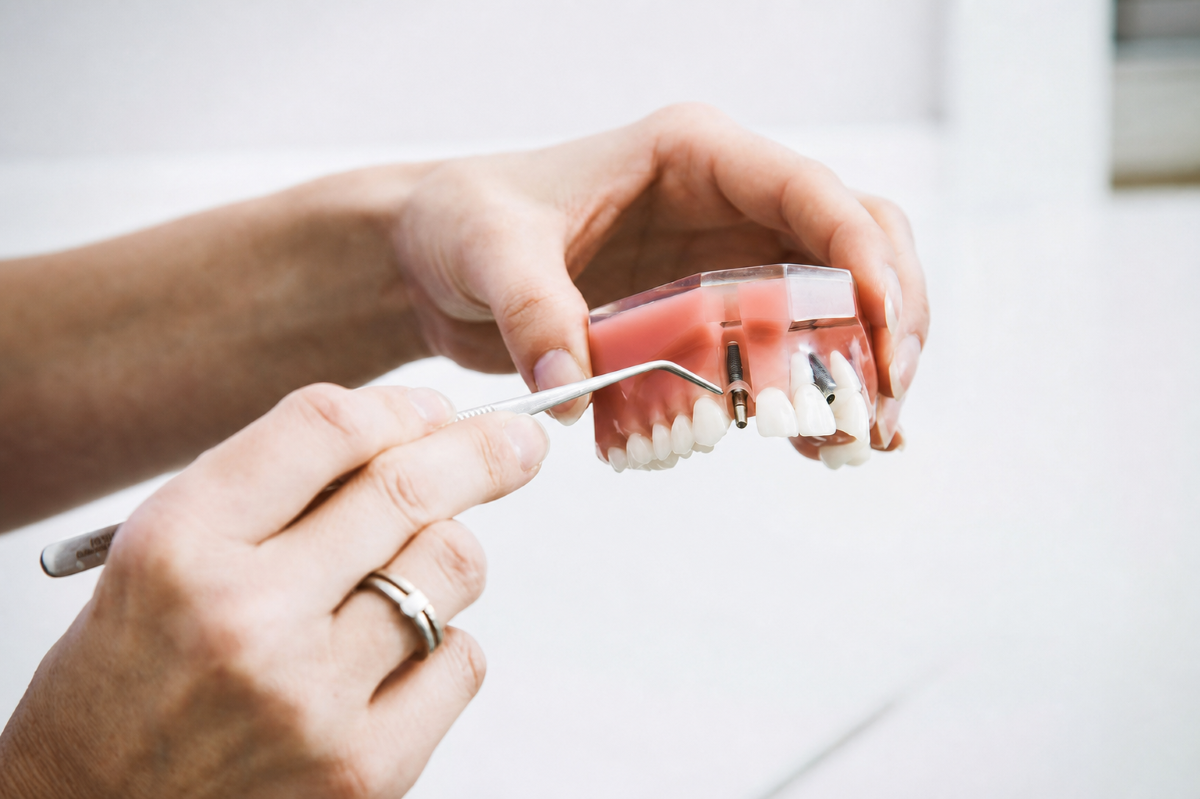
A sinus lift is a surgical procedure that increases bone height in the upper jaw by raising the sinus membrane and placing bone graft material beneath it. It is a preparatory step before dental implant placement, used when natural bone height in the upper jaw is inadequate to support an implant.
What This Procedure Achieves
- Increases bone height in the upper jaw so a dental implant has enough bone to anchor into.
- Known clinically as (sinus augmentation), and performed here by Dr. Mustafa Alani, typically as part of implant placement.
- Uses bone graft material, which may be natural, synthetic, or a combination of both.
- Planned with advanced imaging, including 3D cone beam scans (CBCT).
- Typical cost is $1,000 to $2,000. Final pricing varies based on your individual clinical needs.
- A healing period is required before the implant itself is placed.
This is a preparatory step rather than a treatment in its own right. It exists so an implant can be placed where there is currently not enough bone height, and it is planned from imaging before anything is agreed.
Why Would You Need This Procedure?
Because there is not enough bone where the implant needs to go. The upper back jaw is the thinnest part of the mouth for bone, and the sinus cavity sits directly above it.
Bone in the jaw is maintained by the forces of chewing, transmitted down through tooth roots. Once a tooth is lost, that stimulus disappears and the ridge gradually resorbs.
Meanwhile the sinus above tends to expand downwards into the space left behind. Over several years the gap between the two narrows until an implant has nowhere solid to sit.
The procedure is recommended when:
- Bone height in the upper posterior jaw is insufficient
- Bone loss has occurred following tooth loss
- The sinuses sit too close to the upper jawbone
- You are a candidate for dental implants in the upper molar or premolar area
Suitability is determined through clinical examination and imaging, never from a visual assessment alone. This is why sinus lifting for dental implants is planned as a distinct stage rather than decided on the day.
How Is a Sinus Lift Performed?
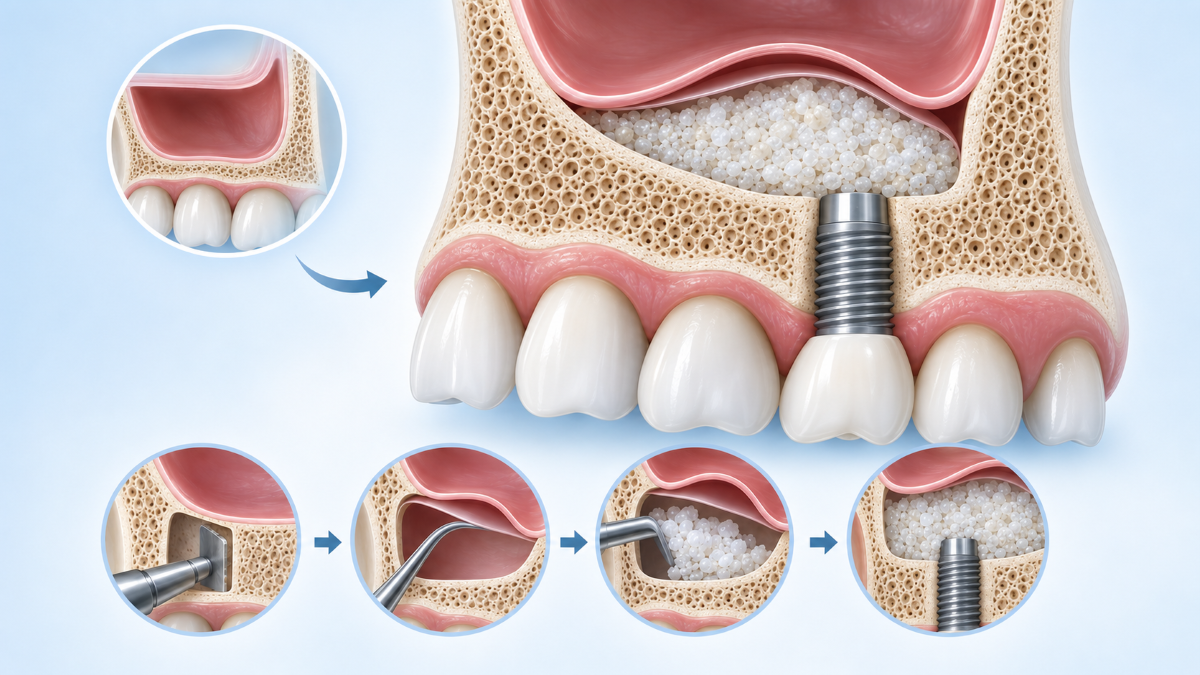
Through the upper jawbone, lifting the membrane rather than cutting through it. The sinus lifting procedure follows a consistent sequence:
- The sinus area is accessed through the upper jawbone.
- The membrane is carefully lifted using precision surgical instruments.
- Bone graft material is placed beneath the lifted sinus.
- Time is allowed for the graft to integrate with your existing bone.
- The implant is placed once integration is confirmed.
Anaesthesia and Sedation
The procedure is performed under appropriate anaesthesia or sedation, and dental sedation options are discussed with you beforehand. Sinus lift surgery is classified as oral surgery, so it is planned in advance rather than added to a routine visit.
What Materials and Technology Are Used?
Bone graft material and imaging do most of the work. Graft materials may be natural, synthetic, or a combination, and the choice follows your anatomy and treatment goals.
- Bone graft materials: natural, synthetic, or combination types
- Advanced imaging including (CBCT) scans for planning
- Precision surgical instruments for membrane elevation
- Sterile, biocompatible materials throughout
Technique is selected case by case rather than applied uniformly, because the position of your sinus relative to your jawbone is individual to you.
How Long Does Healing Take?
A healing period is required before the implant can be placed, and that is not a delay so much as the point of the whole exercise. The graft has to integrate with your existing bone before it can carry a load.
- Bone integration is monitored through follow-up exams and imaging rather than assumed from the calendar
- Post-operative instructions are provided
- Success is evaluated on bone stability and volume
- Timelines vary depending on your individual healing response
Why Timelines Vary
That is the honest answer on sinus lift recovery time. Healing response differs between patients, so your timeline is given to you personally after assessment rather than quoted as a general figure. According to the Canadian Dental Association, following post-operative instructions closely is central to uncomplicated healing.
How Much Does It Cost?
Typical cost runs from $1,000 to $2,000. Final pricing varies based on your individual clinical needs.
- Pricing varies with procedural complexity and treatment planning
- Cost depends on factors including bone graft material and surgical approach
- Insurance coverage may vary depending on your plan and on medical necessity
- Coverage and benefits are reviewed with you before treatment where applicable
What You Are Paying For
A dental sinus lift exists to make long-term implant success possible, so it is best judged against the stability of the finished result rather than as a standalone cost.
Frequently Asked Questions
What is a sinus lift?
What is sinus lift for implants?
What should I expect afterwards?
Is the procedure painful?
Who performs it?
Do all upper implants need one?
What kind of bone graft is used?
Book Your Implant Assessment in Waterloo
If you have been told an upper implant is not possible because of bone loss, this is often the answer to exactly that problem. Assessment starts with imaging, not with a quote.
- Performed by Dr. Mustafa Alani as part of implant treatment planning.
- Bone integration confirmed by follow-up imaging before your implant is placed.
Ask whether sinus lifting is part of your implant plan.
Westmount Dental 50 Westmount Rd N #225, Waterloo, ON N2L 2R5, Canada