
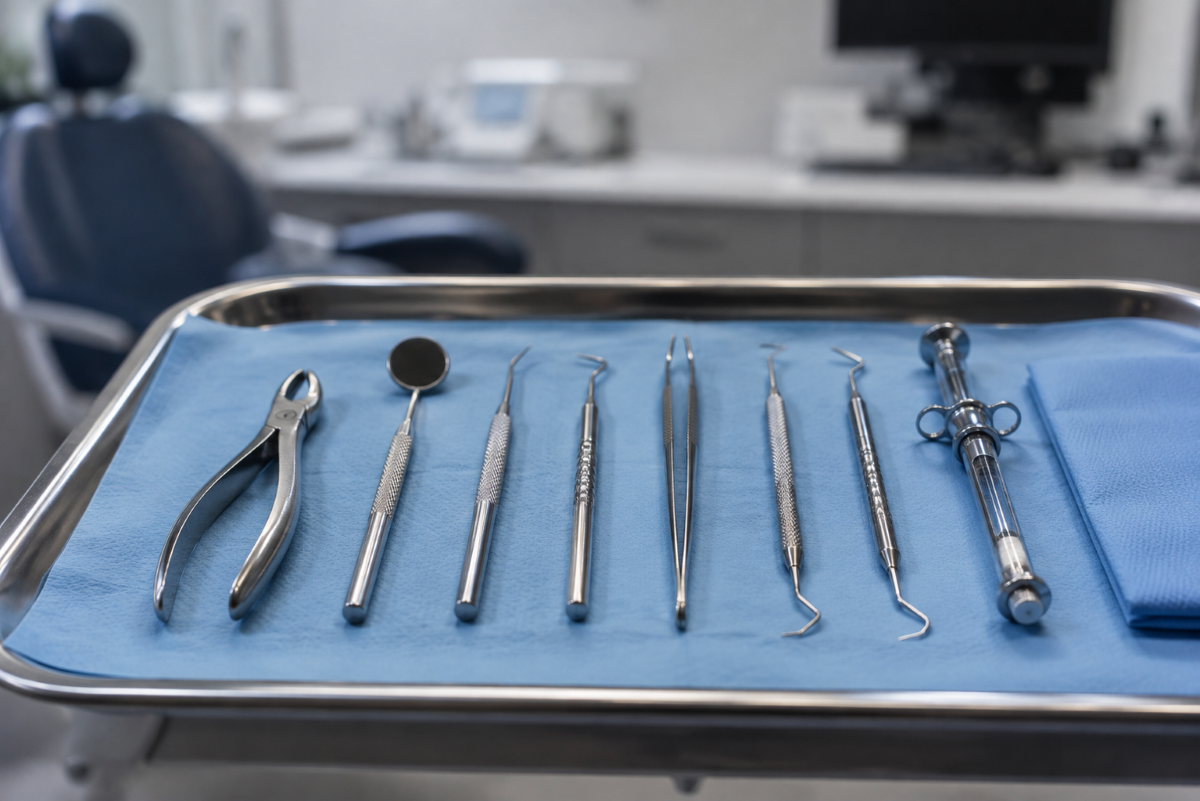
Oral surgery covers surgical dental treatments beyond routine procedures, including complex tooth extractions, impacted teeth, wisdom tooth removal, bone grafting and surgical implant preparation. It is recommended when infection or damage extends below the gumline, when bone or jaw involvement is present, or when surgical access is required.
What Falls Under This Category
- Complex tooth extractions and impacted teeth that cannot be removed routinely.
- Wisdom tooth removal, which is classified as a surgical procedure rather than a simple extraction.
- Bone grafting and surgical implant preparation, including sinus lifting.
- Typical cost is $228 to $730. Final pricing varies based on your individual clinical needs.
- Initial healing typically takes 1 to 5 days, with full recovery in 1 to 2 weeks.
- Written post-operative instructions are provided, and your follow-up appointment is booked in advance.
Surgical treatment here is decided from clinical evaluation and imaging, and the procedure is explained to you clearly before it is booked. Comfort is managed with local anaesthesia, with sedation available where it is appropriate.
When Is Oral Surgery Needed Instead of Routine Treatment?
When the problem is no longer reachable by ordinary means. A routine filling or a simple extraction works on what is accessible; oral surgery exists for what is not.
Some patients call these mouth operations, or an oral operation in the singular, but the scope is the same. Surgery is recommended when:
- Teeth are impacted or otherwise difficult to remove
- Infection or damage extends below the gumline
- Bone or jaw involvement is present
- Surgical access is required to treat the problem properly
| Routine treatment | Oral surgery | |
|---|---|---|
| Handles | What is accessible in the mouth | Teeth and tissue below the gumline |
| Typical cases | Fillings, simple extractions | Impacted teeth, complex extractions, bone grafting |
| Access | No surgical access needed | Surgical access required |
| Bone or jaw involvement | None | Present |
| Decided by | Examination | Clinical evaluation and imaging |
Every one of those judgements rests on clinical evaluation and imaging, not on how a tooth looks from the outside. Dental surgery is never the default option, and the reasoning is explained to you before anything is scheduled.
What Procedures Are Included?
Four broad categories, all of which share the need for surgical access. These oral surgical procedures are:
- Complex extractions, where a tooth is fractured, curved-rooted, or below the gumline
- Impacted teeth, most commonly wisdom teeth
- wisdom tooth extraction, classified as a surgical procedure in its own right
- Bone grafting and surgical implant preparation, including sinus lifting ahead of an upper implant
How Surgery Fits a Wider Plan
Because these overlap with implant planning, surgical preparation is usually sequenced as part of a wider treatment plan rather than treated as an isolated event. Teeth surgery of this kind is planned around the restorative work that follows it.
Does Surgical Treatment Hurt?
Local anaesthesia is used to prevent pain during surgery, and most patients report pressure rather than pain. That is the honest description, and it surprises people who were expecting worse.
- Local anaesthesia prevents pain during the procedure
- dental sedation options are available where appropriate
- Post-surgical discomfort is discussed with you in advance, not afterwards
- Pain management instructions are provided in writing
What Discomfort Is Normal
Discomfort after mouth surgery is normal and expected rather than a sign of a problem. Swelling and soreness are both explained as part of ordinary healing, so you know in advance what falls inside the normal range.
How Long Does Recovery Take?
Initial healing typically takes 1 to 5 days, and full recovery 1 to 2 weeks. How long it actually takes depends on the procedure type and its complexity.
- Initial healing: 1 to 5 days
- Full recovery: 1 to 2 weeks
- Swelling and soreness explained as normal
- Aftercare instructions reviewed with you in detail
Written Instructions and a Booked Follow-Up
You receive written post-operative instructions rather than verbal ones you have to remember, and your follow-up appointment is booked in advance rather than left for you to arrange. According to the Canadian Dental Association, following post-operative instructions closely is central to uncomplicated healing.

How Much Does It Cost?
Typical cost runs from $228 to $730. Final pricing varies based on your individual clinical needs.
- Cost varies by procedure type and difficulty
- Wisdom tooth surgery costs are discussed separately
- Insurance coverage is reviewed when applicable
- You are informed of costs before treatment begins
Complexity is the main variable, which is why the range is wide and why an oral surgery clinic estimate follows imaging rather than a phone description. Where multiple procedures are needed, they are quoted and sequenced together.
Frequently Asked Questions
What counts as oral surgery?
Why does my extraction need surgery?
Will I be awake during oral surgery?
How long will I be swollen afterwards?
Do I get instructions to take home?
Is wisdom tooth removal counted separately?
Does insurance cover it?
Book a Surgical Assessment in Waterloo
Surgical treatment is decided by imaging, not by guesswork, so the first step is an assessment rather than a quote. If you have been referred for oral surgery near you in Waterloo, or told an extraction is more complex than usual, that assessment is where to start.
- Local anaesthesia standard, with sedation options available where appropriate.
- Written post-operative instructions, and your follow-up booked before you leave.
Book an assessment to find out whether oral surgery is genuinely needed.
Westmount Dental 50 Westmount Rd N #225, Waterloo, ON N2L 2R5, Canada