

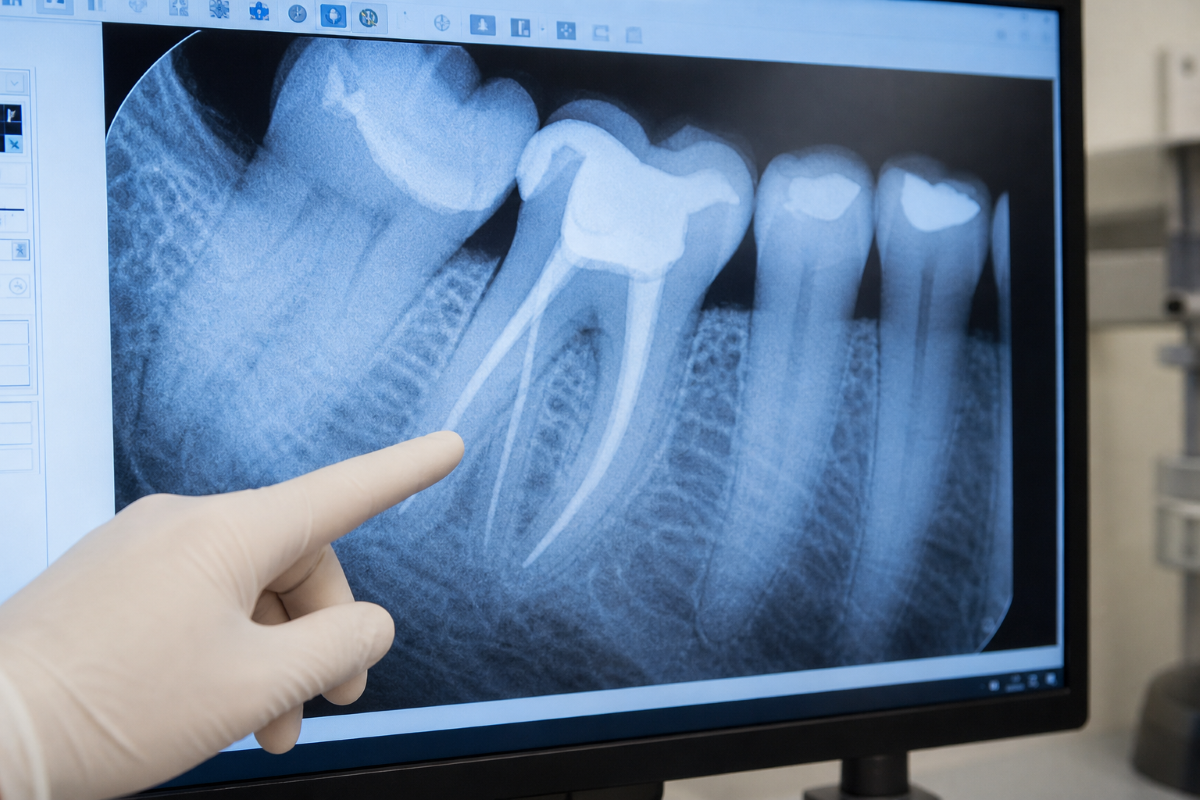
A root canal removes infected or damaged pulp from inside a tooth, then cleans and seals the canals so the tooth can be kept rather than extracted. It is indicated by lingering pain, sensitivity to hot and cold, pain on biting, or swelling in the gum or jaw.
The Signs That Actually Matter
- Pain that keeps you awake at night, rather than pain that comes and goes.
- Lingering pain that stays after the trigger has gone.
- Hot and cold sensitivity, particularly when it does not settle quickly.
- Aching, consistent pain rather than a sharp twinge.
- Painkillers are usually not effective, which is the clearest signal of all.
- Swelling in the gums or jaw, or pain when chewing or biting.
If painkillers are not touching it and it is keeping you up, that is not a wait-and-see situation.
What Are the Symptoms?
The pattern matters more than the intensity. Root canal symptoms are distinguished from ordinary sensitivity by how long the pain lasts and whether it settles.
- Persistent tooth pain or sensitivity
- Pain when chewing or biting
- Swelling in the gums or jaw
- Sensitivity to hot or cold that lingers rather than passing in seconds
Why the Pattern Matters More Than the Pain
All of these are confirmed through examination rather than diagnosed from description. A tooth that twinges on cold water and recovers in two seconds is behaving differently from one that aches for twenty minutes afterwards.
What Does a Root Canal Involve?
Four stages, and the whole point is preservation. The root canal procedure removes the problem while keeping the tooth.
- The procedure is explained to you step by step before treatment begins.
- Local numbing is used to ensure your comfort.
- The infected or damaged (pulp) is removed from inside the tooth.
- The canals are cleaned and sealed.
Your comfort is monitored throughout the visit rather than checked once at the start. Dental root canal treatment, sometimes called root canal therapy, has a reputation it has largely outgrown, and the numbing is the reason.
Afterwards, a dental crown is often recommended, because a treated tooth has less internal structure than it did and benefits from protection.
Keep the Tooth or Extract It?
This is the real decision, and the long-term value of each is explained to you rather than left implied.
| Keeping the tooth | tooth extraction | |
|---|---|---|
| The tooth | Kept and restored | Removed |
| What follows | Often a crown to protect it | Replacement discussed: bridge, denture or implant |
| Cost | $750 to $1,450 per tooth | $318 to $731 per tooth, plus replacement later |
| Bite | Unchanged, your own tooth stays in place | Changes, and neighbouring teeth may drift |
| Best when | The tooth is restorable | The tooth cannot be saved |
Final pricing varies based on your individual clinical needs. The root canal vs extraction arithmetic looks different once the cost of replacing the tooth is included, which is why that comparison is made openly.
What Is Recovery Like?
Mild soreness or sensitivity, improving within a few days. Root canal recovery is considerably less dramatic than most patients expect.
- Mild soreness or sensitivity after treatment
- Symptoms typically improve within a few days
- Pain management instructions are provided
- Normal activities resumed shortly afterwards
- Follow-up care is discussed if it is needed
Root canal pain during the procedure is prevented by local numbing. The discomfort patients describe afterwards is soreness in the surrounding tissue rather than pain from the tooth itself.
Aftercare
According to the Canadian Dental Association, following post-operative instructions closely supports uncomplicated healing.
How Much Does It Cost?
Typical cost is $750 to $1,450 per tooth. Final pricing varies based on your individual clinical needs.
- Cost varies based on tooth type and complexity
- Insurance coverage is reviewed when applicable
- Cost is discussed before treatment begins
- Long-term value compared to extraction is explained
- Treatment is covered under the Canadian Dental Care Plan, subject to CDCP approval and limits
Complexity is the main variable. A front tooth has a single canal; a molar can have three or four, which is why the range spans what it does.
Can It Be Avoided?
Sometimes, and the honest answer is that it depends on how early the problem is caught.
- Early detection through regular dental exams
- The importance of treating cavities early, before decay reaches the pulp
- Preventive care emphasised specifically to reduce the risk
- A clear explanation of why treatment is recommended in your case
- Alternative options discussed where appropriate
The Preventive Argument
A dental filling placed early costs a fraction of what follows once decay reaches the nerve. That is the whole preventive argument, and it is the reason recall appointments matter.
Frequently Asked Questions
What exactly is the treatment?
Does it hurt?
How do I know if I need one?
How long does recovery take?
Is it better to keep the tooth or extract it?
Will I need a crown afterwards?
Is it covered by insurance?
Get Assessed in Waterloo
Pain that painkillers will not touch does not resolve on its own, and the tooth is usually still saveable at that stage. If you need root canal treatment near you in Waterloo, the assessment is the first step.
- Local numbing throughout, with the procedure explained step by step beforehand.
- Long-term value compared honestly against extraction, including replacement costs.
Book an assessment before the tooth becomes unsaveable.
Westmount Dental 50 Westmount Rd N #225, Waterloo, ON N2L 2R5, Canada