

Full mouth rehabilitation is a single coordinated plan that restores the function and appearance of the whole mouth, rather than treating one tooth at a time. A plan may combine implants, crowns, bridges, veneers and bite correction, and it is built around comprehensive bite analysis and 3D scanning.
What a Plan Can Include
- Implants, to replace missing teeth.
- Crowns, where teeth need full coverage.
- Bridges, where a gap can be spanned.
- Veneers, where appearance is part of the goal.
- Bite correction and (TMJ) jaw joint care, where the way the teeth meet is part of the problem.
- Timeline is fully case-dependent, and so is cost.
The whole mouth is assessed and planned before treatment starts, because the order the work is done in changes the result. Records come first, then the plan is agreed as a whole and delivered in phases.
What Makes It Different From One Treatment at a Time?
The sequence. When several things need attention, the order changes the outcome.
- Treatments are selected and sequenced together, not booked one by one
- The bite is assessed as a whole, since a restoration built to a bad bite will not last
- Function and appearance are planned in the same conversation
- The plan is individual, so no two cases run the same way
Full mouth reconstruction is the same idea under a different name, and patients use both terms. Some also call it full mouth restoration or simply full mouth rehab, and dental rehabilitation is the broader term. The service is the same.
How Is the Case Assessed and Planned?
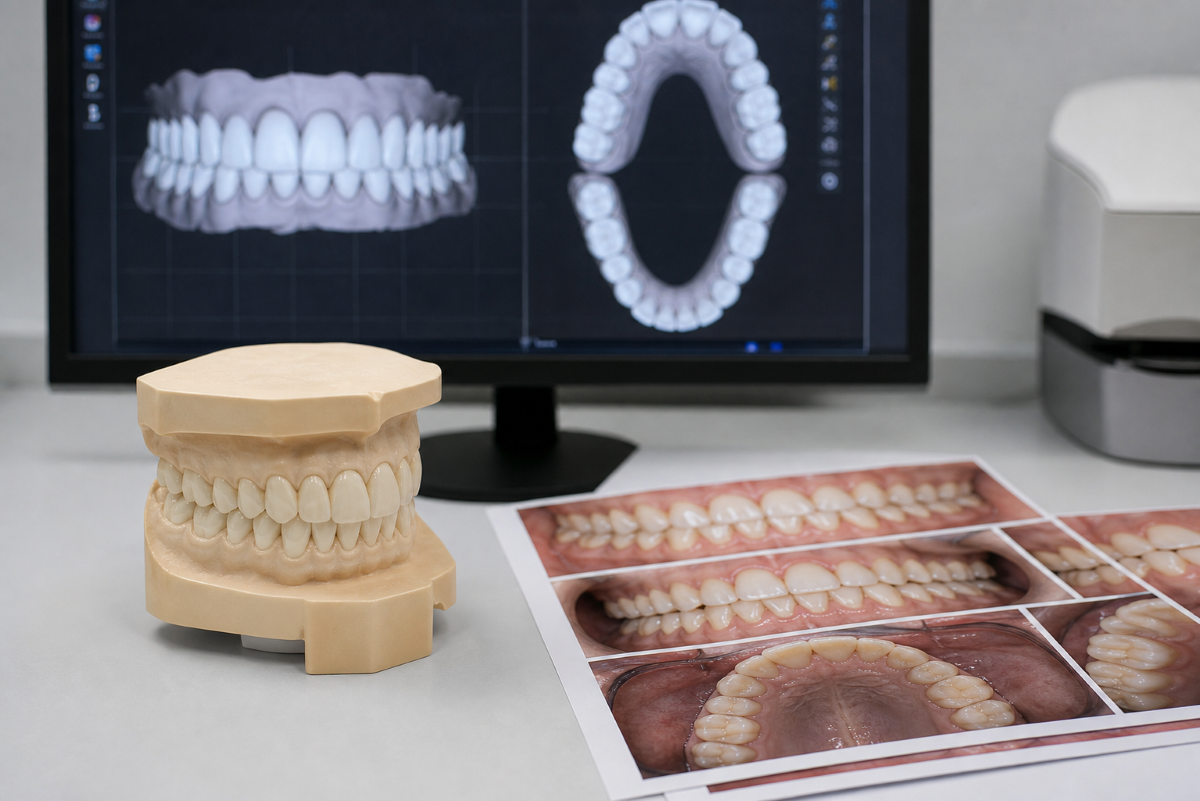
Thoroughly, and before any treatment decision is made. Full mouth rehabilitation planning here uses:
- Comprehensive bite analysis and occlusal evaluation
- Digital bite and occlusion analysis
- Full-arch 3D intraoral scanning
- Full-mouth photography
- Wax-up or mock-up previews, so the intended result can be seen before it is built
- CBCT imaging, for which patients are referred to a nearby office
The wax-up is the stage worth understanding. A mock-up lets you react to the planned result while it is still changeable, which is a different conversation from approving a plan on paper.
Where the CBCT Is Taken
CBCT is referred out rather than taken in house, to an office close by. That is stated plainly here so there are no surprises about where part of your imaging happens.
What Are the Steps?
- Comprehensive assessment, including bite and occlusal evaluation.
- Diagnostic records: 3D scanning, full-mouth photography, and CBCT where referral is needed.
- Planning, with a wax-up or mock-up preview where useful.
- Phased treatment, sequenced to the case.
- Review and maintenance, ongoing.
Why No Duration Is Given
Step four is deliberately not given a duration. The timeline is fully case-dependent, and any number quoted before your records are taken would be invented.
Where Does This End and a Single Treatment Begin?
The answer is about scope rather than complexity.
| Your situation | Where it is covered |
|---|---|
| Several teeth, plus the bite itself, needing coordinated work | This page |
| One or more missing teeth | Dental implants |
| A damaged tooth, or a gap between sound teeth | Crowns and bridges |
| Appearance of the front teeth | Veneers |
| Grinding or jaw joint symptoms alone | Night guards and bite appliances |
| A cosmetic-led change to how the smile looks | Smile makeover |
Plenty of cases start in one of the lower rows and belong in the first. The assessment tells them apart.
How Much Does Full Mouth Rehabilitation Cost?
There is no fixed price, because cost depends entirely on which treatments your plan includes. A figure quoted before the records are taken would not mean anything.
- Full financing is available
- Phased treatment allows the work to be broken into stages
- Third-party payment plans are available
- Payment plans at zero interest are offered
Final pricing varies based on your individual clinical needs. The full mouth rehabilitation cost conversation happens after the records, not before, because a plan built around two crowns and a night guard and a plan built around implants and veneers are different pieces of work.
How Insurance Applies
Insurance coverage depends on the individual procedures within the plan rather than on the plan as a whole, which is another reason phasing is discussed openly.
Does Full Mouth Rehabilitation Have to Happen All at Once?
No. Phased treatment is a standard option here, not a concession.
- The plan is broken into stages where that suits you
- Financing and payment plans support phasing
- Sequencing still follows the clinical order, not just the budget
- The whole plan is agreed first, then delivered in parts
Phasing works because the destination is decided at the start. Treating the same teeth reactively over years, without a plan, is how bites end up in trouble.
According to the Canadian Dental Association, regular examination allows problems to be identified early, which is when planning is simplest.
Frequently Asked Questions
What is a full mouth rehab?
What are the steps?
How much does it cost to fix your whole mouth?
How long does treatment take?
How painful is it?
How long will the result last?
Is it covered by insurance?
Book a Full Mouth Assessment in Waterloo
If several things need attention and you have been treating them one at a time, a coordinated plan is usually the more predictable route. For full mouth rehabilitation in Waterloo, the assessment and records come first.
- Bite analysis, 3D scanning and mock-up previews before any treatment decision.
- Phased delivery with financing and zero interest payment plans available.
Book an assessment and see the whole plan before you start it.
Westmount Dental 50 Westmount Rd N #225, Waterloo, ON N2L 2R5, Canada