
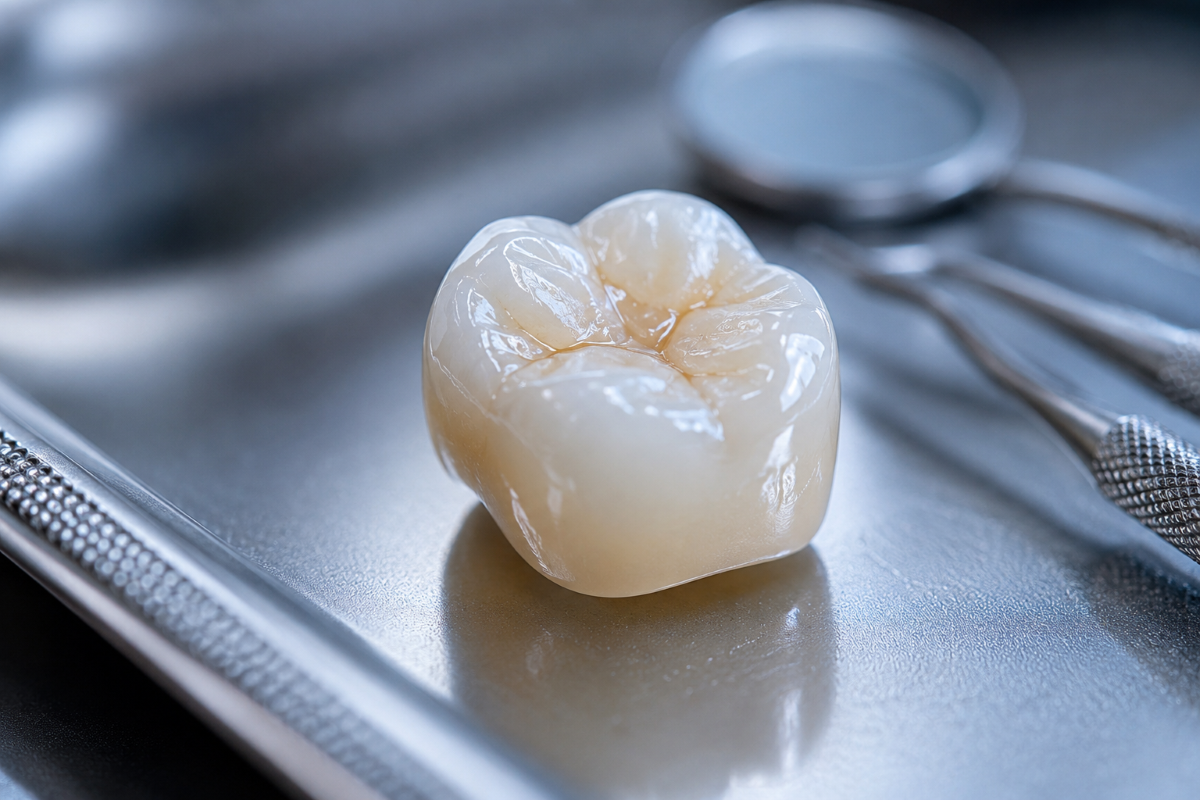
A same day crown is a dental crown designed, made and fitted in a single visit using digital scans and computer-aided design instead of traditional moulds. The crown is milled from a solid block of ceramic on site, which removes the need for a temporary crown while a laboratory makes one.
Made Here, Not Sent Away
- Crowns are fabricated in house, and delivered same day or next day depending on the case.
- Digital scans replace traditional impression moulds.
- CAD/CAM (computer-aided design and manufacturing) technology designs the crown, and an in-office milling unit produces it.
- No temporary crown for 2 to 3 weeks, which is the real comfort gain.
- Typical cost $1,850 to $2,000 per tooth. Final pricing varies based on your individual clinical needs.
- Suitability is based on case selection, determined by tooth structure and bite.
Whether your tooth suits this route is established at a comprehensive examination, because suitability depends on tooth structure and bite. Where it does, the crown is designed, milled and bonded here, either the same day or the next, and the cost is set out before treatment starts.
Can a Crown Really Be Made in One Day?
Often yes, and sometimes it is the next day instead. That distinction is worth stating plainly rather than glossing over.
Crowns here are fabricated in house and delivered same day or next day, depending on case selection. Either way you avoid the conventional wait, which is where the benefit actually sits.
- A conventional crown means a temporary for 2 to 3 weeks while a lab makes the permanent one
- An in-house crown removes that wait entirely
- Which route suits you is determined by tooth structure and bite
- A comprehensive examination is performed before the approach is recommended
Better patient comfort is the stated reason for doing it this way, and the temporary crown is the part patients most dislike about conventional treatment.
When Is a Same Day Crown Recommended?
Where a tooth needs full coverage rather than a filling. The recommendation follows clinical evaluation and the condition of the tooth.
- To restore teeth with significant decay or damage
- For cracked, worn, or weakened teeth
- To replace old or failing crowns, where a root canal has already been completed
Replacing a Failed Crown
That third case is common and often overlooked. Replacing a crown that has failed avoids a second stretch of weeks in a temporary, which matters more the second time round.
How Is the Crown Made?
Five stages, all inside the practice. The same day crown procedure is genuinely different from conventional crown work rather than a faster version of it.
- Digital scans are taken to capture precise tooth measurements.
- The crown is designed using computer-aided technology.
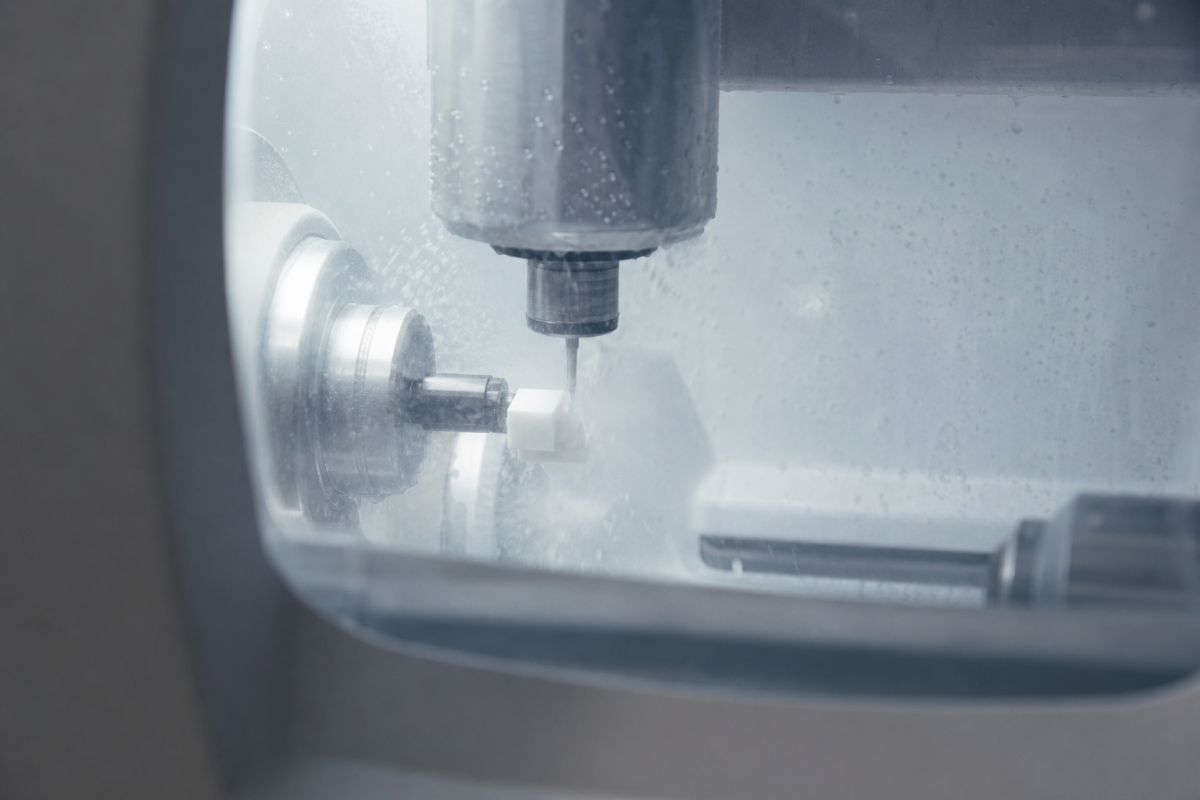
- The crown is milled on site from a solid block of material.
- The tooth is prepared.
- The crown is bonded, on the same day or the next.
Why the Milling Unit Matters
The milling unit in the practice is the reason step three happens here rather than in a laboratory a week away. A practice can only offer this where the equipment is on site. The procedure is completed efficiently and with minimal discomfort.
Same Day or Conventional Crown?
The finished restoration is a permanent crown either way. What differs is the route to it.
| In-house crown | Conventional laboratory crown | |
|---|---|---|
| Impressions | Digital scan | Traditional mould |
| Fabrication | Milled on site from a ceramic block | Sent to an external laboratory |
| Temporary crown | Not needed | Worn for 2 to 3 weeks |
| Delivery | Same day or next day | After the lab returns it |
| Suitability | Based on case selection | Broader |
Conventional crown options, materials and bridge work are covered on the crowns and bridges page. Which route applies to you is decided at examination.
What Materials Are Used?
Tooth-coloured ceramic or porcelain, selected for strength, fit and appearance.
- Tooth-coloured ceramic or porcelain materials
- Milled from a solid block, not built up in layers
- Materials selected for strength, fit, and aesthetics
- Technology chosen based on your restorative needs
Milling from a solid block matters more than it sounds. A crown cut from one piece of ceramic has no internal joins, which is a genuine structural advantage.
Monitoring the Restoration
According to the Canadian Dental Association, restorations should be monitored at regular check-ups alongside your natural teeth.
How Much Does It Cost?
Typical cost is $1,850 to $2,000 per tooth. Final pricing varies based on your individual clinical needs.
- A comprehensive examination is performed before treatment is recommended
- Insurance coverage may vary based on your plan and restorative benefits
- Coverage and benefits are reviewed with you prior to treatment
- Value is explained in terms of durability, convenience, and time savings
The same day crown cost sits slightly above a conventional crown, and the difference buys you the elimination of a two to three week temporary rather than a different final result.
Frequently Asked Questions
Can a crown be made the same day?
Can I get a crown done in one day?
Are same day crowns any good?
How much does it cost?
Do I still need a temporary crown?
Can you replace an old crown this way?
What machine makes the crown?
Book a Crown Assessment in Waterloo
If a crown is on the cards, it is worth asking whether yours can be made here rather than sent away. If you are looking for same day crowns near you in Waterloo, the examination establishes whether your case suits it.
- Fabricated in house, delivered same day or next day, with no two to three week temporary.
- Milled from a solid ceramic block, with materials selected for strength, fit and appearance.
Ask whether your tooth suits this route.
Westmount Dental 50 Westmount Rd N #225, Waterloo, ON N2L 2R5, Canada