
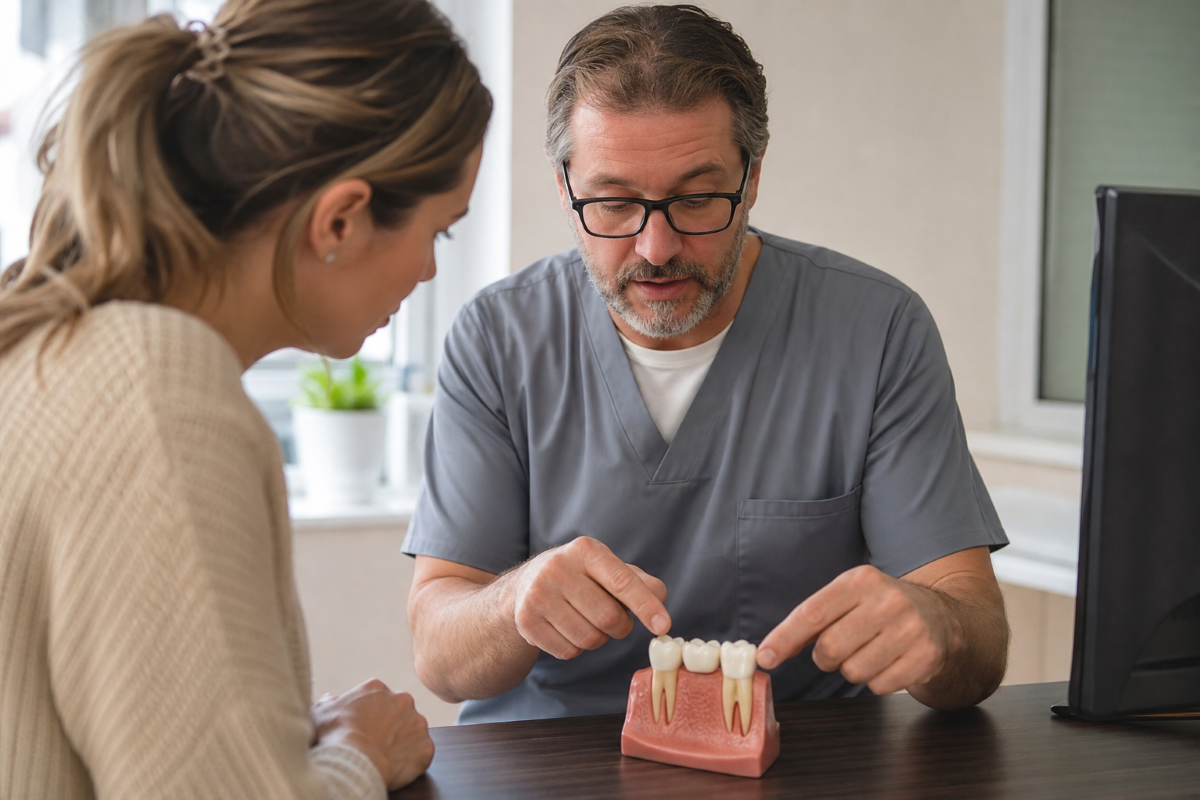
Dental crowns restore and protect damaged or weakened teeth by covering them completely, while dental bridges replace one or more missing teeth by anchoring to the teeth either side. Crowns are often placed after a large filling or root canal treatment. Both are recommended following clinical evaluation.
Crowns and Bridges at a Glance
- Crown materials: porcelain or ceramic, zirconia, and porcelain-fused-to-metal.
- Bridge designs: traditional, cantilever, and Maryland. Each crown and bridge case is specified individually.
- Crown cost $1,450 to $1,850. Bridge cost $4,000 to $7,000, depending on design and span.
- Crown lifespan from 5 years. Bridge lifespan 5 to 15 years.
- Material and design chosen on strength, aesthetics and bite.
- Both covered under the Canadian Dental Care Plan, subject to CDCP approval and limits.
Final pricing varies based on your individual clinical needs.
When Do You Need a Crown Rather Than a Filling?
When there is not enough sound tooth left for a filling to hold. A dental crown covers the whole tooth rather than filling a hole in it.
- After a large filling, where the remaining tooth wall is thin
- After root canal treatment, since the tooth has less internal structure
- Where a tooth is damaged or weakened and needs protecting
- To restore both structure and appearance in one restoration
A Crown Keeps a Tooth Rather Than Replacing It
Crowns are recommended specifically to preserve natural teeth when possible, which is the point often missed. A tooth crown is a way of keeping a tooth, not a step towards losing it.
What Types of Dental Crowns Are Available?
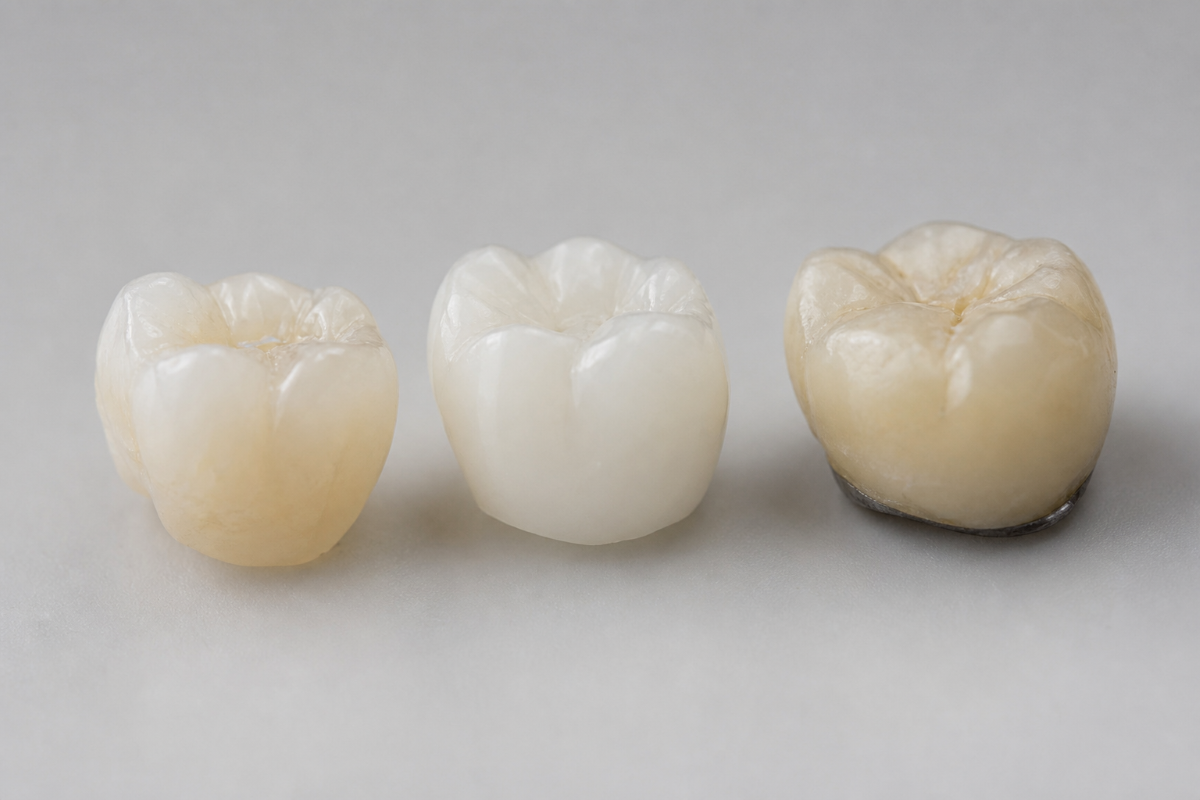
Three materials, chosen on the balance between strength, appearance and your bite.
| Crown type | Character | Typical use |
|---|---|---|
| Porcelain crown, or ceramic dental crown | Best natural appearance | Front teeth, visible restorations |
| Zirconia crown | Strongest of the three | Back teeth, heavy bite forces |
| Porcelain fused to metal crown | Strength with a porcelain surface | Where both are needed |
The dental crown procedure is the same across materials, but types of dental crowns are not interchangeable. Material and design are chosen based on strength, aesthetics and bite, so a molar taking heavy load and an upper front tooth are specified differently.
Where a crown can be designed and fitted in one visit, that is covered separately under same-day crowns.
What Types of Bridges Are There?
Three designs, and which suits you depends on the teeth either side of the gap. Types of dental bridges offered here are:
- Traditional bridges, anchored to a crown on each side of the gap
- Cantilever dental bridge designs, supported from one side only
- Maryland dental bridge designs, bonded to the backs of the adjacent teeth
A dental bridge is used when teeth are missing and the adjacent teeth can support the replacement. A single tooth bridge spanning one gap is the most common case, and cost rises with the span.
Crown, Bridge, or Implant?
This is the decision that matters, and all three are explained before you choose.
| Crown | Bridge | dental implants | |
|---|---|---|---|
| Used when | The tooth is damaged but present | A tooth is missing and neighbours can support it | A tooth is missing |
| Affects other teeth | No | Yes, the adjacent teeth are prepared | No |
| Cost | $1,450 to $1,850 | $4,000 to $7,000 | $4,800 to $6,000 per implant |
| Lifespan | From 5 years | 5 to 15 years | Depends on hygiene and bone health |
| Requires | Sufficient remaining tooth | Healthy adjacent teeth | Sufficient jawbone support |
Bridges are discussed when teeth are missing and implants are not chosen. Bone health, cost and longevity are weighed openly before any decision.
How Long Do Crowns and Bridges Last?
Crowns from 5 years, bridges 5 to 15 years, and in both cases the range depends on you as much as on the restoration.
- Longevity depends on material, bite forces and oral care
- Regular dental exams help monitor restorations over time
- Replacement is discussed when wear or damage occurs
Protecting the Work
If you grind, an occlusal night guard protects the investment. According to the Canadian Dental Association, regular check-ups let existing restorations be monitored alongside natural teeth.
How Much Do Crowns and Bridges Cost?
Dental crown cost runs from $1,450 to $1,850. Dental bridge cost runs from $4,000 to $7,000, depending on the design and the span of the bridge.
- Cost varies by material, tooth location and complexity
- Insurance coverage is reviewed when applicable
- Crowns are covered under CDCP, subject to approval and limits
- Long-term value compared to alternative treatments is explained
Why the Bridge Range Is Wide
Final pricing varies based on your individual clinical needs. Span is the main variable on a bridge: replacing one tooth and replacing three are different pieces of work, which is why the range is as wide as it is.
Frequently Asked Questions
What is the difference between a crown and a bridge?
Do I need a crown after a root canal?
Which crown material is best?
How much does a dental crown cost in Canada?
How much does a dental bridge cost in Canada?
Should I choose a bridge or an implant?
How long will my crown last?
Book a Restorative Assessment in Waterloo
Whether a tooth needs protecting or a gap needs filling, the assessment establishes which option actually fits. If you are looking for dental crowns near you in Waterloo, that evaluation comes first.
- Three crown materials and three bridge designs, specified to your bite rather than a default.
- Crown, bridge and implant compared openly, including cost and what each does to neighbouring teeth.
Book an assessment for crowns and bridges and see the options side by side.
Westmount Dental 50 Westmount Rd N #225, Waterloo, ON N2L 2R5, Canada