
Smoothies first, eggs and pasta next, hot coffee later. Your first week of meals after a tooth comes out, planned step by step.
Knowing what to eat after tooth extraction protects the blood clot that starts your healing. For the first 12 hours, stick to soft, cold or room-temperature foods such as smoothies, yogurt and cooled soup. Move to easy-to-chew foods over the next few days, keep chewing away from the site for a week, and skip hot drinks, straws and alcohol.
Eating Well While Your Socket Heals
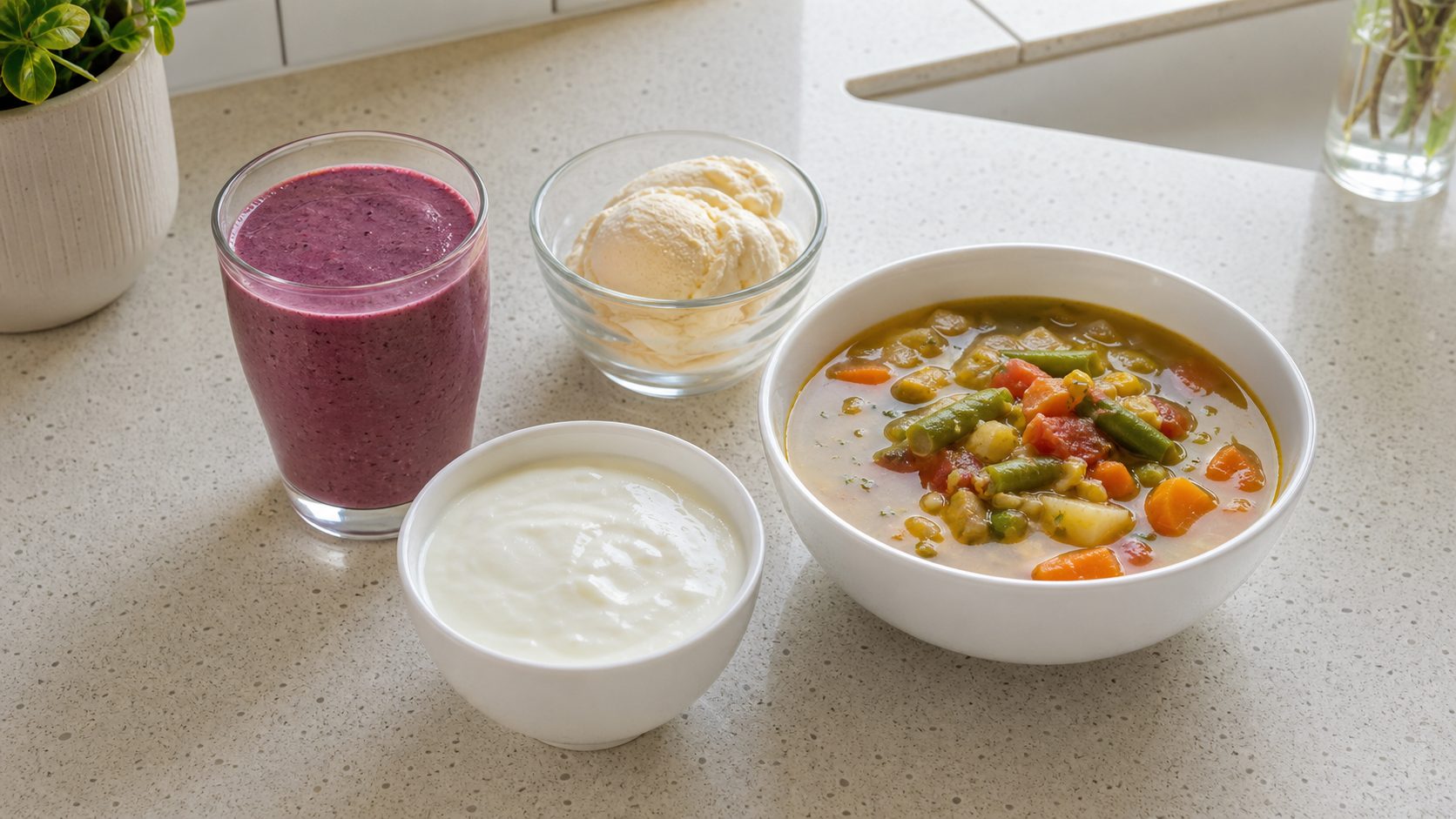
- The first 12 hours are for soft foods served cold or at room temperature: smoothies, yogurt, ice cream and soup that has cooled down.
- No straws, no spitting and no rinsing for the first 2 days. Drink from a glass and swallow gently.
- Hot drinks and hot soup can restart bleeding, so let everything cool first.
- For the first week, chew on the side away from the extraction site.
- Initial healing begins within 1 to 5 days, and full healing usually takes 1 to 2 weeks.
- Hard, chewy and crunchy foods wait until the area has healed and chewing feels comfortable.
Most patients leave an extraction appointment at our Westmount Road North office in Waterloo with two questions: how soon can I eat, and what is safe? The answers are simpler than they seem, and they change a little each day. This guide walks you through the first hours, the first week and the return to normal meals, so you can plan your groceries before your appointment instead of after it.
What to Eat After Tooth Extraction in the First 12 Hours
The first meal matters most, because the socket is still forming its clot. When patients ask what can I eat after tooth extraction on day one, our answer is short: soft, smooth and not hot.
When to start eating
Your first meal comes after the gauze stage. The Canadian Dental Association advises keeping the gauze pad in place for an hour with firm, steady pressure, even if it feels soggy. Once the bleeding has settled, you can start with something cool and gentle.
The best choices for day one
For the first 12 hours, choose foods that need no chewing and are served cold or at room temperature:
- Smoothies, eaten with a spoon or sipped from a glass (never through a straw)
- Yogurt, plain or blended until smooth
- Ice cream, in a bowl and eaten slowly
- Soup that has cooled to room temperature, blended if it has chunks
These are the soft foods to eat after tooth extraction that our team recommends first, because they nourish you without asking the healing area to do any work.
Why hot food waits
Heat is the one thing to avoid on day one. According to the Canadian Dental Association, hot liquids such as coffee, tea and hot soup increase blood flow to the area, and the wound can start to bleed again. If you make soup, let it cool before you eat it.
Why Straws, Spitting and Rinsing Wait Two Days
At Westmount Dental, we ask every extraction patient to avoid three habits for the first 2 days:
- Using a straw. Drink straight from a cup instead.
- Spitting. Let toothpaste foam and saliva fall gently from your mouth, or swallow.
- Rinsing. Hold off on mouth rinses and swishing until your dentist says it is time.
Each of these creates pressure or movement inside the mouth. The CDA also warns patients not to suck on the wound and not to rinse during the first 24 hours, even if the oozing leaves a bad taste. Protecting the clot early is the simplest way to keep healing on track.
What to Eat After Tooth Extraction: Days 1 to 7
After the first 12 hours, your menu can grow a little each day. You still want soft foods to eat after tooth extraction that are easy to manage, and you still chew on the opposite side for the first week. If you are wondering what can I eat after tooth extraction once the first day is behind you, think "soft, mild and lukewarm at most".
Easy-to-chew foods
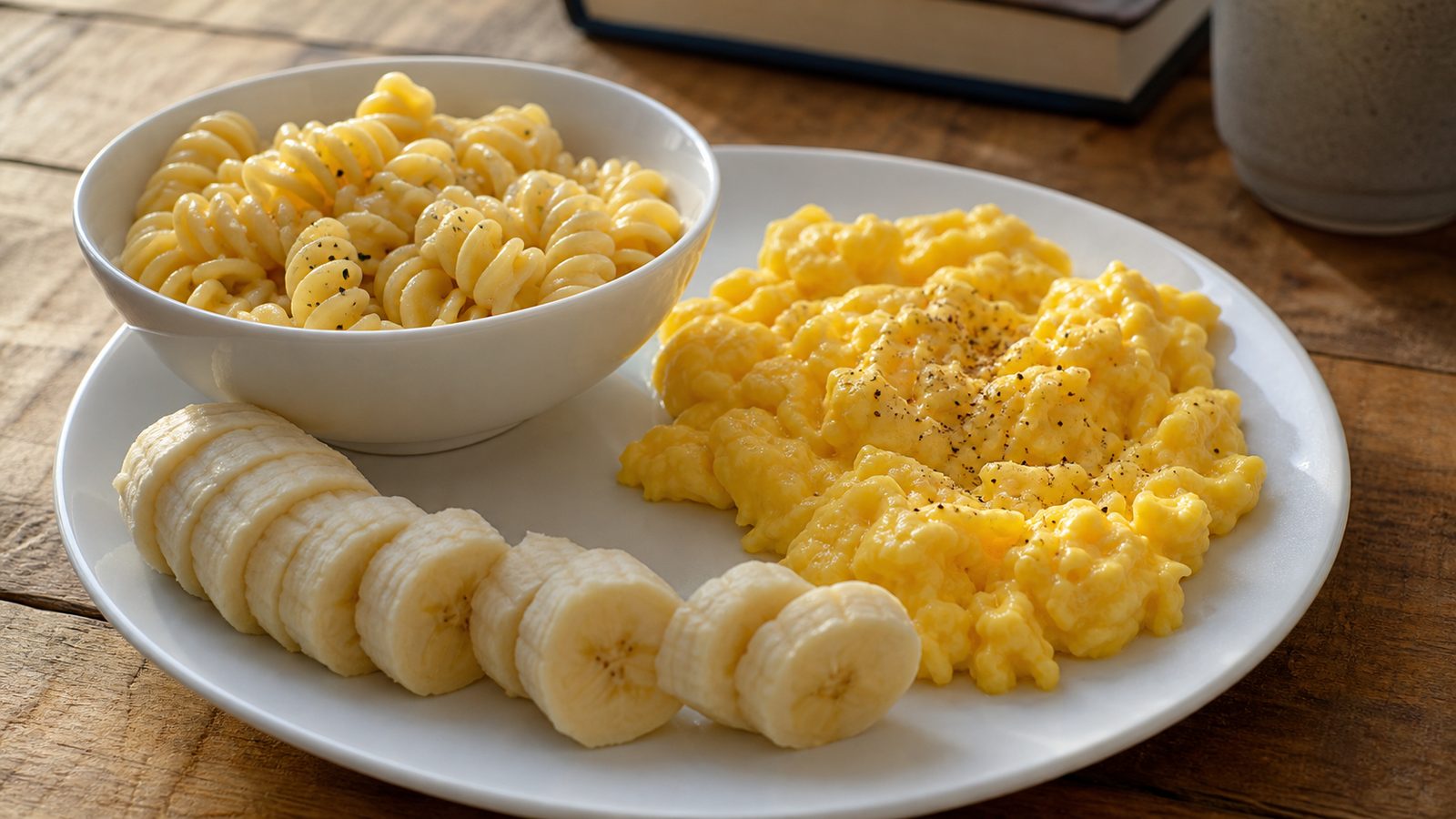
The Canadian Dental Association lists foods that are easy to chew, such as eggs, pasta and bananas, as good choices after oral surgery. Build your meals around that idea:
- Scrambled or soft-cooked eggs
- Well-cooked pasta in a mild sauce
- Ripe bananas, mashed or sliced thin
- Yogurt and smoothies, which stay useful all week
Drinks that help
Drinks count as nutrition when chewing is limited. The CDA suggests milk, milkshakes and juices. Serve them cool, pour them into a glass, and leave the straw in the drawer for the first 2 days.
What to expect around day three
Many patients feel a little more discomfort around day three. This is a normal part of healing, and it is not a sign that you ate the wrong thing. Keep meals soft on that day, and follow the pain management guidance your dentist gave you.
These foods to eat after tooth extraction also suit busy weeks: most of them need little cooking, and you can prepare them before your appointment.
Things to Avoid After Tooth Extraction
Knowing what to skip is just as useful as knowing what to buy. These are the main things to avoid after tooth extraction while the area heals:
- Hot drinks and hot soup. Let them cool first, especially in the first days.
- Hard or chewy foods. The CDA advises against chewing gum and eating hard or chewy foods after oral surgery. That includes anything you have to crunch or tear.
- Alcohol. The CDA recommends avoiding alcohol and tobacco for the first 2 weeks, because both make it harder for blood to clot and easier for infection to start.
- Smoking. We discourage smoking during healing for the same reason.
- Straws, spitting and rinsing. Avoid all three for the first 2 days.
- Strenuous activity. Rest helps; heavy exercise can wait until the first stage of healing is over.
When Can You Eat Normally Again?
Healing happens in stages, and your diet can follow the same stages. At our office, we explain the timeline like this:
| Healing stage | What it usually means for meals |
|---|---|
| First 12 hours | Soft foods, cold or at room temperature, no chewing |
| Days 1 to 5 | Initial healing; easy-to-chew foods, chewing on the other side |
| First week | Keep chewing away from the extraction site |
| 1 to 2 weeks | Full healing for most patients; firmer foods return gradually |
Everyone heals at a slightly different pace. Before your tooth extraction in Waterloo, your dentist explains whether it will be a simple or a surgical extraction, and the recovery steps that go with it.
Eating After Wisdom Tooth Extraction
Wisdom teeth sit at the very back of the mouth, so removal can leave your jaw feeling stiff. The Canadian Dental Association notes that after oral surgery, jaw muscles may be sore and opening wide may be hard for up to 7 to 10 days.
That changes the menu a little. The best foods to eat after wisdom teeth removal are ones that need only a small bite and very little chewing: yogurt, smoothies from a glass, cooled soup, soft eggs and well-cooked pasta. Do not force your mouth open for a large bite. If you are planning wisdom tooth extraction in Waterloo, shop for these foods ahead of time so you are not standing in a grocery store the same afternoon.
When to Call Your Dentist
Some soreness, swelling and tenderness are expected after an extraction, and symptoms typically improve within a few days. Based on CDA guidance for care after oral surgery, call your dentist if:
- You are still bleeding a lot 4 hours or more after the extraction
- Your pain is not getting any better a full day or more after the extraction
- Your swelling is still getting worse 2 days or more after the extraction
- You feel like you are going to throw up
Every patient who has a tooth removed at Westmount Dental goes home with a written instruction sheet, so you always have the eating, rinsing and activity steps in front of you.
Questions Patients Ask About Eating After an Extraction
How long after tooth extraction can you eat?
You can usually eat once the gauze stage is over and the bleeding has settled. The Canadian Dental Association advises keeping the gauze in place for an hour. For the first 12 hours, choose soft foods served cold or at room temperature, such as smoothies, yogurt, ice cream and cooled soup.
When can I eat hard foods after tooth extraction?
Hard and chewy foods wait until the area has healed. Chew away from the extraction site for the first week, and expect full healing within about 1 to 2 weeks for most patients. Bring firmer foods back slowly, starting on the opposite side, and stop if chewing on the healing side feels sore.
Can I drink coffee after tooth extraction?
Not hot coffee in the first days. The Canadian Dental Association advises avoiding hot liquids like coffee and tea after oral surgery, because heat increases blood flow and the wound can start bleeding again. If you want coffee, let it cool to room temperature or drink it iced, and sip it from a cup rather than a straw for the first 2 days.
Can I drink alcohol 24 hours after tooth extraction?
No. The Canadian Dental Association recommends avoiding alcohol and tobacco for the first 2 weeks after oral surgery. Both make it harder for blood to clot and easier for an infection to start, and they slow healing. The CDA also advises against drinking alcohol while taking pain relief medication.
When can I eat after wisdom tooth extraction?
The same plan applies: once the gauze stage is over, start with soft foods that are cold or at room temperature, then move to easy-to-chew foods such as eggs, pasta and bananas. Because your jaw may be stiff for up to 7 to 10 days, take small bites and do not force your mouth open.
Planning an Extraction? Let's Make Recovery Easier
Still wondering whether you will be able to eat normally after your tooth comes out? The first week is far easier to plan for when you know the steps before your appointment.
- Local numbing keeps you comfortable, and most patients feel pressure rather than pain during the extraction.
- Your dentist explains whether you need a simple or a surgical extraction, and what that means for healing, before treatment begins.
- You leave with written aftercare instructions covering eating, rinsing and activity, plus pain management guidance.
Learn more about tooth extraction in Waterloo and book your visit online, or come see us at 50 Westmount Rd N #225 in Waterloo.