
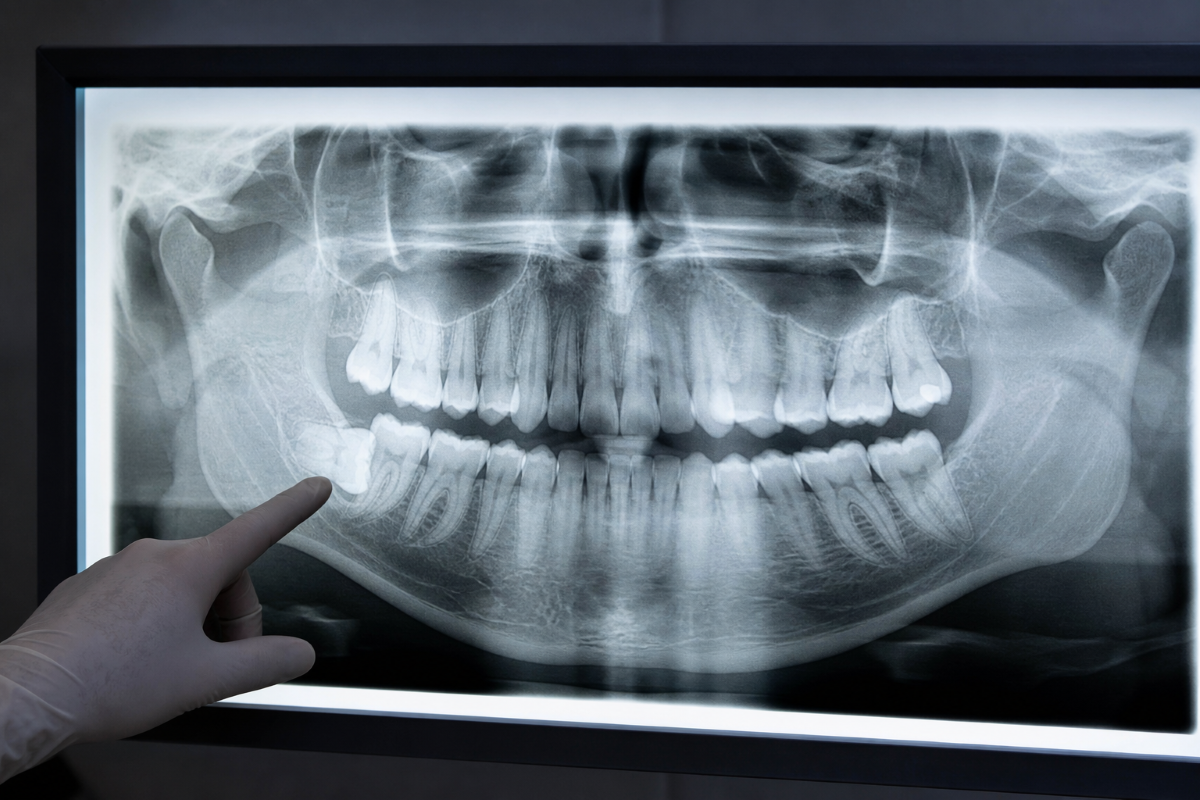
Wisdom tooth extraction is the surgical removal of a third molar, the last teeth to emerge, typically between 17 and 25 years of age. Removal is considered when there is insufficient space in the jaw, signs of infection or decay, or an impact on neighbouring teeth and bite.
What You Need to Know First
- Wisdom teeth are third molars that usually emerge in the late teens or early adulthood, typically between 17 and 25.
- Some patients have fewer than four, and some have none at all. Eruption timing varies from person to person.
- Development is monitored at routine dental exams, so removal is rarely a surprise.
- Typical cost is $318 to $731 per tooth. Final pricing varies based on your individual clinical needs.
- Local numbing is standard, with sedation options discussed where appropriate.
- Post-operative care instructions are provided, and every patient receives a written aftercare sheet.
Removal is not automatic. Whether a wisdom tooth needs to come out is decided from examination and imaging, and where it does, timing is discussed against your age and the risk of leaving it.
When Do Wisdom Teeth Come In?
Between roughly 17 and 25 years of age, though the range is wide. These are third molars, sitting at the very back of the mouth, and they are the last adult teeth to arrive.
Not everyone gets all four. Some patients have fewer and some have none, which is why development is tracked at routine exams rather than predicted from age.
What Are the Signs Wisdom Teeth Are Coming In?
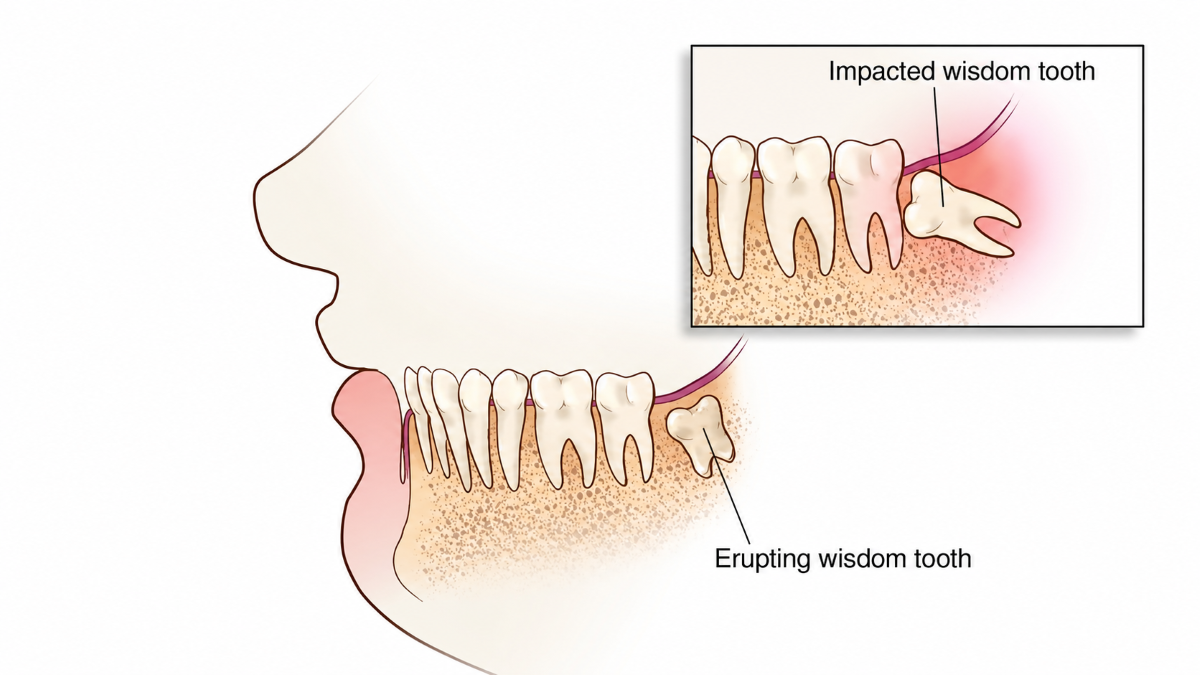
Discomfort at the back of the jaw is the first sign of wisdom teeth coming in. A grown in wisdom tooth may cause no trouble, while one that lacks space announces itself:
- Jaw pain or pressure at the back of the mouth
- Swelling or tenderness in the gums around the erupting tooth
- Difficulty opening the mouth fully
- Headaches or ear-related discomfort
Why Partial Eruption Causes Trouble
Where a tooth breaks through only halfway, the gum around a partially erupted wisdom tooth is difficult to clean, which invites infection. Symptoms are assessed through examination and imaging, not from description.
Do Wisdom Teeth Always Need to Be Removed?
No. Monitoring is a legitimate outcome, and which applies depends on what examination and imaging show.
Removal is assessed against:
- The position and alignment of the tooth
- The space available in the jaw
- Signs of infection, decay, or gum disease
- Any impact on nearby teeth or your bite
| Removal recommended | Monitoring recommended | |
|---|---|---|
| Position and alignment | Crowded, angled or (impacted) | Upright with room to erupt |
| Space in the jaw | Insufficient | Sufficient |
| Infection, decay or gum disease | Present or recurring | Absent |
| Effect on nearby teeth | Pressure or damage | None |
| Reviewed at | A planned surgical visit | Routine exams and imaging |
Timing is discussed against risk and your age, because an impacted tooth removed at twenty behaves differently from the same tooth at forty. Impacted wisdom teeth are the commonest reason removal is recommended rather than deferred, and a single impacted wisdom tooth can be enough.

What Happens During and After Removal?
Wisdom teeth surgery is classified as oral surgery, so wisdom teeth extraction is planned rather than squeezed in.
- Position and space are assessed through examination and imaging.
- The procedure is explained to you in full beforehand.
- Local numbing is used, and dental sedation options are discussed where appropriate.
- Mild to moderate discomfort is expected during recovery.
- The recovery timeline is explained, including swelling and healing.
- Post-operative care instructions are provided in writing.
What Recovery Actually Feels Like
Expect mild to moderate discomfort rather than none. Wisdom teeth removal recovery involves swelling as part of normal healing, and wisdom tooth extraction recovery timelines are set out in advance. According to the Canadian Dental Association, following post-operative instructions closely is central to uncomplicated healing.
How Much Does Wisdom Tooth Extraction Cost?
Typical cost runs from $318 to $731 per tooth. Final pricing varies based on your individual clinical needs.
- Cost varies with tooth position and complexity
- Sedation or surgical factors may affect pricing
- Insurance coverage is reviewed when applicable
- Costs are explained before treatment begins
Why the Range Is Wide
Position is the biggest variable. A fully erupted tooth and a deeply impacted one sit at opposite ends of the range, which is why an estimate follows imaging. Where several teeth are involved, oral surgery planning covers them together.
Frequently Asked Questions
How do you know if your wisdom teeth are growing?
When do wisdom teeth stop growing?
What is partial eruption of wisdom teeth?
Do wisdom teeth on top need removing too?
Does wisdom tooth removal hurt?
Is it better to remove wisdom teeth young?
What if my wisdom teeth are not causing problems?
How much does it cost for all four?
Book Your Assessment in Waterloo
If something is aching at the back of your jaw, an examination and imaging will settle whether it needs removing or just watching. Searching for wisdom teeth removal near you in Waterloo, or wisdom tooth extraction near you, is worth turning into an appointment before the pain escalates.
- Position and space assessed with imaging before any recommendation is made.
- Sedation options discussed where appropriate, with written post-operative instructions provided after every wisdom tooth extraction.
Book an assessment for wisdom tooth extraction and find out where you actually stand.
Westmount Dental 50 Westmount Rd N #225, Waterloo, ON N2L 2R5, Canada