


Gauze, oozing, swelling and a raised pillow: what is normal on night one after an extraction, and when to call.
The first night after tooth extraction is mostly about protecting the new clot. Expect some oozing, soreness once the freezing wears off, and mild swelling. Keep firm pressure on gauze in one-hour blocks, rest with your head raised, use a cold compress, and avoid rinsing, spitting, straws and heavy activity.
Getting Through Night One
- Gauze works through firm, steady pressure, used in one-hour blocks.
- A little oozing for up to 24 hours is normal; blood mixed with saliva looks like more than it is.
- Most discomfort comes in the first 24 to 48 hours, after the freezing wears off.
- Cold compresses help on day one; warmth only starts on day two.
- Rest with your head raised, and brush gently while staying away from the socket.
- No rinsing, spitting or straws for the first 2 days at Westmount Dental.
You are home from your appointment in Waterloo, the freezing is starting to fade, and the evening stretches ahead. Night one feels uncertain mainly because people do not know what is normal. Below, we go through the hours in order: the gauze, the bleeding, the pain, the swelling, sleep and brushing, so you can tell expected healing apart from a reason to call.
The First Hour: How Long to Keep Gauze In
Your dentist places a gauze pad over the socket before you leave. According to the Canadian Dental Association, that pad should stay where it is for one full hour, even when it feels soggy, while you bite down with firm and constant pressure.
If the area is still bleeding after that hour, swap in a fresh pad and keep the same steady pressure for another hour. This is the answer to when to stop using gauze after tooth extraction: once the bleeding has slowed to a light ooze, the gauze has done its job.
A few habits help the gauze work:
- Bite down; do not chew on the pad.
- Do not suck on the area or poke at it with your tongue.
- Sit or lie with your head raised rather than flat.
The same steps apply when you are wondering when to stop using gauze after wisdom tooth extraction. Back teeth can be harder to reach, so place each fresh pad directly over the socket before you bite.
Bleeding on the First Night After Tooth Extraction
Some bleeding tonight is part of normal healing. The CDA explains that most people bleed for the first hour or 2, and the area can keep oozing for up to 24 hours.
Why it can look worse than it is
Blood mixes with saliva in your mouth. A small amount of blood can tint a lot of saliva pink, which makes the bleeding look heavier than it really is.
The 4-hour line
Time is the clearest guide. If 4 hours or more have passed and firm pressure on a gauze pad still does not control the bleeding, call your dentist. Until then, rest, keep your head up and keep using the gauze in one-hour blocks.
Pain After the Freezing Wears Off
Local numbing keeps the extraction itself comfortable; most patients describe pressure rather than pain. Feeling is different once the freezing fades, and some discomfort is normal. The CDA notes that pain is usually strongest in the first 24 to 48 hours, with some soreness at the site for 3 to 5 days.
Before you leave our office, you receive pain management guidance. On night one, a few points matter most:
- Take any medication exactly as your dentist and pharmacist instructed, and never more than advised.
- Tell your dentist about other prescriptions or herbal supplements you take.
- Do not drink alcohol while taking pain relief medication.
- If a medication is a narcotic, do not drive or use machines while taking it.
Mild to moderate soreness and some tenderness are expected. Pain that is not getting any better after a full day is worth a call.
Swelling: Cold First, Warm Later
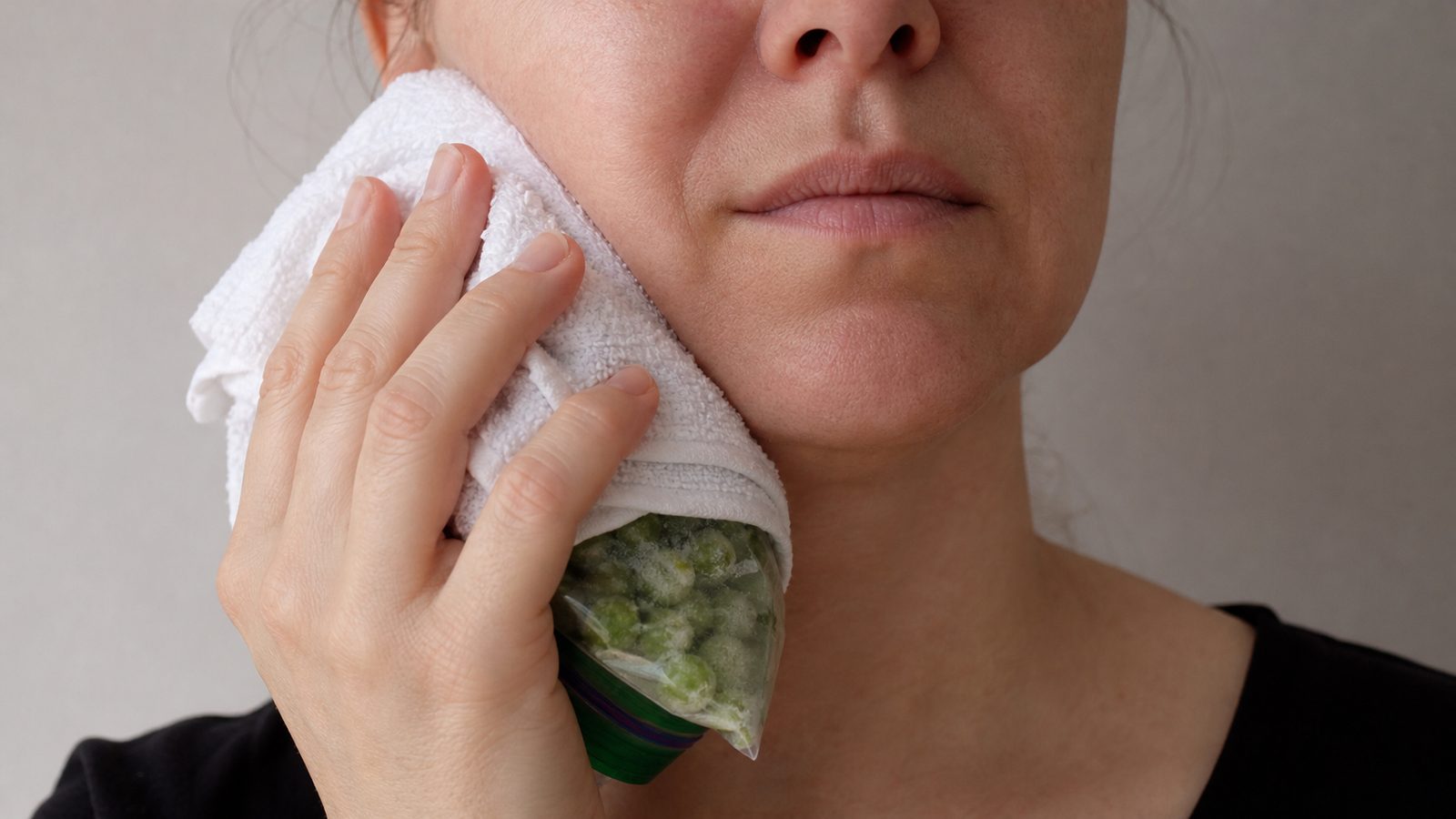
Swelling often builds during the first 24 hours, so night one is the time to get ahead of it. The Canadian Dental Association describes a simple cold compress routine:
- Wrap ice cubes or a bag of frozen vegetables in a towel.
- Hold it on the swollen side for 10 minutes.
- Take it off for 10 minutes.
- Repeat through the first 24 hours whenever you can.
Heat waits. Warmth in the first 24 hours makes swelling worse; a warm compress only starts on the second day. Swelling can last 5 to 7 days, and some bruising may appear as it goes down. If swelling is still getting worse 2 days after your extraction, contact your dentist.
Sleeping on the First Night After Tooth Extraction
Rest is part of the treatment. The CDA explains that being up and about can increase discomfort, while rest slows blood flow and helps you heal faster.
For tonight, try this setup:
- Prop yourself up with an extra pillow so your head stays raised.
- Keep a few clean gauze pads and a cold compress within reach.
- Plan a quiet evening; heavy lifting and workouts can wait.
The CDA advises against straining yourself for 2 full days after oral surgery, and at our Waterloo office we discourage strenuous activity while the socket heals.
Brushing and Rinsing Tonight
Keeping your mouth clean still matters on night one. The CDA advises brushing and flossing as usual, staying away from the wound and using only a little water.
At Westmount Dental, we add three rules for the first 2 days:
- No rinsing. Skip mouthwash and swishing, even when a bad taste builds up.
- No spitting. Let toothpaste foam fall gently into the sink instead.
- No straws. Drink straight from a glass.
Once your dentist says rinsing can start, the CDA describes a gentle rinse with warm water, sometimes with half a teaspoon of salt in a cup, several times a day for a few days.
Dinner on Night One
Your evening meal should be soft and cool or at room temperature, and you should chew on the opposite side. For a full menu, from the first spoonful to your return to normal meals, read our guide on what to eat after tooth extraction. It answers the first night after tooth extraction what to eat question in detail, along with coffee and alcohol.
Your Night-One Checklist
- Keep firm pressure on gauze for an hour; repeat with a fresh pad if needed.
- Start the cold compress routine: 10 minutes on, 10 minutes off.
- Take medication exactly as instructed.
- Eat something soft and cool, away from the socket.
- Brush gently around the area; no rinsing, spitting or straws.
- Sleep with your head raised.
Call your dentist if firm pressure has not controlled the bleeding by the 4-hour mark, or if you start to feel nauseous.
Night-One Questions After a Tooth Extraction
How long to keep gauze in after tooth extraction?
Keep the first gauze pad in place for one hour with firm, constant pressure, even if it feels soggy. If the socket is still bleeding after that hour, replace it with a fresh pad and keep pressing for another hour. If firm pressure has not controlled the bleeding after 4 hours, call your dentist.
How to stop bleeding after tooth extraction?
Bite down firmly on a clean gauze pad placed over the socket and hold steady pressure for an hour. Rest with your head raised, since rest slows blood flow. Avoid hot liquids, rinsing, spitting and straws, which can restart bleeding. Light oozing for up to 24 hours is normal; heavy bleeding after 4 hours needs a call to your dentist.
Can you brush your teeth after wisdom teeth removal?
Yes. The Canadian Dental Association advises brushing and flossing as usual after oral surgery, while staying away from the wound and using only a little water. At Westmount Dental, we also ask patients not to rinse or spit for the first 2 days, so let toothpaste foam fall gently from your mouth.
How to reduce swelling after wisdom teeth removal?
Use a cold compress on the first day: 10 minutes on, 10 minutes off, as often as you can during the first 24 hours. Do not apply heat during that time. On the second day, switch to a warm compress to help swelling go down. Swelling can last 5 to 7 days; call your dentist if it is still increasing after 2 days.
How long should you wait to exercise after tooth extraction?
Give yourself at least 2 full days without straining. The Canadian Dental Association advises against straining for 2 days after oral surgery, and rest helps the socket heal. Heavy workouts and lifting can return gradually once the first stage of healing is over and bleeding has stopped.
Nervous About Night One? We Plan It With You
Worried about handling bleeding, swelling or pain on your own after your tooth comes out? Knowing the plan before your appointment makes the evening calmer.
- Your dentist explains the procedure before treatment, including whether yours is a simple or surgical extraction.
- Patient comfort is monitored throughout, with local numbing during the extraction.
- You head home with post-operative care instructions in writing and pain management guidance for the days that follow.
See how tooth extraction in Waterloo works at our office, or read about wisdom tooth extraction in Waterloo. Then book online, or stop by 50 Westmount Rd N #225 to schedule your visit.