
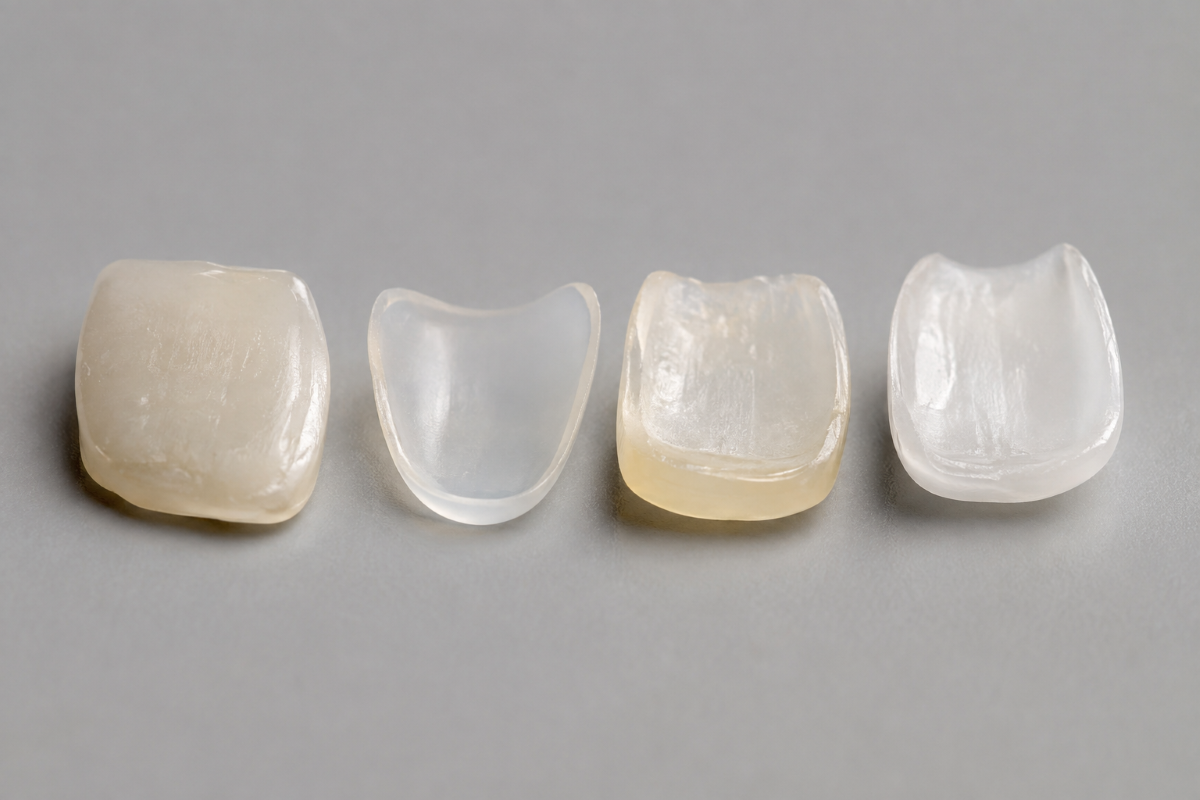
Dental veneers are thin shells bonded to the front surface of teeth to change their colour, shape or alignment. They are made from composite resin, porcelain, lithium disilicate or zirconia, and are used to treat staining, chips, cracks, wear, gaps and uneven tooth shapes. Suitability is assessed individually.
Veneers at a Glance
- Four materials available: composite, porcelain, E.max (lithium disilicate) and zirconia.
- Composite $418 to $500 per tooth, lasting 1 to 5 years. Porcelain $1,000 to $1,200, E.max and zirconia $1,000 to $1,300, all lasting 8 to 15 years.
- Planned using digital smile design and a smile preview, so you see the result before committing.
- Digital intraoral scanning replaces traditional impressions.
- Minimal-prep or conservative techniques are used where the case allows.
- Cost is discussed per tooth, and phased treatment options can be arranged.
Final pricing varies based on your individual clinical needs.
What Problems Do Dental Veneers Fix?
Mostly appearance, and specifically the front teeth people notice when you talk. Dental veneers are recommended for:
- Stained or severely discoloured teeth that whitening will not shift
- Chipped, cracked, or worn teeth, including veneers for chipped front tooth cases
- Gaps or uneven tooth shapes, with composite veneers to close gaps where the span is small
- Smile enhancement, as part of a wider smile makeover
- Congenitally missing teeth, where veneers on the adjoining teeth close the space
- Finishing work after orthodontic treatment
Congenitally Missing Teeth and Post-Orthodontic Cases
Where a tooth never developed, veneers on the neighbouring teeth can reshape the space into a balanced smile without an implant. Suitability is assessed case by case.
Which Veneer Material Is Right for You?
The honest answer depends on aesthetics, durability and your bite, which is exactly how the recommendation is made here. Lithium disilicate veneers, sold under the E.max name, sit at the strong end of the ceramic range. Composite veneers cost less and last less; the ceramics cost more and last far longer.
| Material | Cost per tooth | Expected lifespan |
|---|---|---|
| Composite | $418 to $500 | 1 to 5 years |
| Porcelain | $1,000 to $1,200 | 8 to 15 years |
| E.max, lithium disilicate | $1,000 to $1,300 | 8 to 15 years |
| Zirconia | $1,000 to $1,300 | 8 to 15 years |
Final pricing varies based on your individual clinical needs. The ceramic options are covered in more depth on the porcelain veneers page, since the material choice between them turns on strength and translucency rather than on price.
How Are Veneers Planned and Placed?
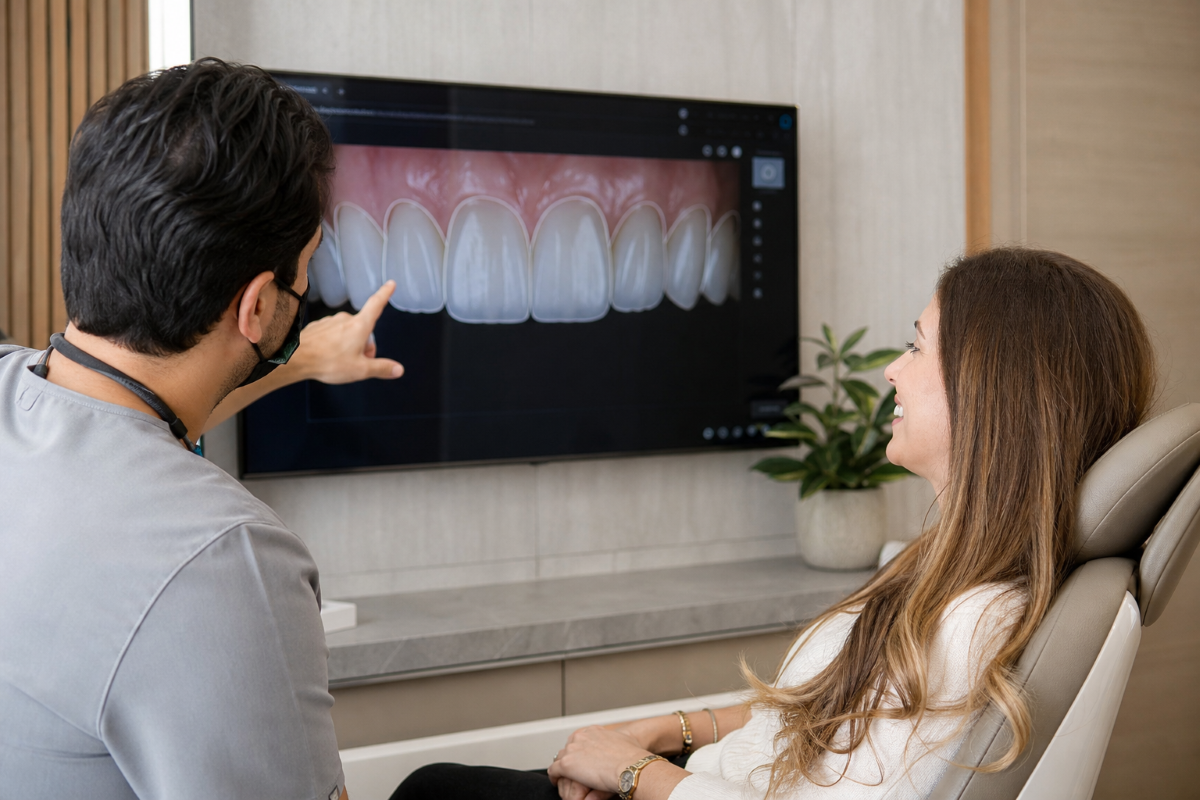
Digitally, and with a preview before anything is prepared. The veneer procedure here begins on a screen, which is the part patients underestimate: you see the proposed result first.
- Digital smile design and smile preview
- Digital intraoral scanning instead of putty impressions
- Minimal-prep or conservative techniques where suitable
- Precision bonding protocols at placement
Why the Preview Matters
Technology is selected according to case complexity, so a single chipped front tooth and a full upper arch are not planned the same way. Seeing the proposed result before any tooth is prepared is what makes the decision reversible. According to the Canadian Dental Association, cosmetic treatment decisions should follow an assessment of your overall oral health rather than appearance alone.
How Much Do Veneers Cost?
Cost for dental veneers is discussed on a per-tooth basis, which makes the arithmetic straightforward once you know how many teeth are involved. Cosmetic veneers are priced by material, not by appointment.
- Composite: $418 to $500 per tooth
- Porcelain: $1,000 to $1,200 per tooth. E.max and zirconia: $1,000 to $1,300 per tooth
- The difference between a single veneer and a full smile is explained clearly
- Total investment varies by material and number of teeth
- A personalised treatment and cost plan is provided
- Phased treatment options may be discussed where that suits you better
Final pricing varies based on your individual clinical needs.
How Long Do Veneers Last, and How Do You Maintain Them?
Dental veneers last 1 to 5 years in composite and 8 to 15 years in the ceramics, though lifespan depends as much on your habits as on the material.
- Proper hygiene and routine dental exams are emphasised
- Wear, staining and replacement timelines are discussed openly
- Bite protection and lifestyle guidance are provided
- Realistic expectations are set before treatment, not after
What Shortens a Veneer's Life
If you grind your teeth, that conversation happens before placement rather than after a veneer fractures. An occlusal night guard is often part of protecting the investment.
Frequently Asked Questions
What are dental veneers?
How long do veneers last?
How much do veneers cost?
Composite or porcelain veneers: which is better?
Can veneers close a gap between my teeth?
Will I see what my smile looks like first?
Do I need veneers on every tooth?
Book a Veneer Consultation in Waterloo
Seeing the design before committing changes the conversation entirely. If you are considering dental veneers near you in Waterloo, or searching for veneers near you, the consultation starts with a digital preview rather than a sales pitch. Veneers treatment here begins with a plan you can see.
- Digital smile design and intraoral scanning, with minimal-prep techniques where suitable.
- Four materials with clear costs and lifespans, quoted per tooth.
Book a consultation to find out whether veneers suit your teeth and your bite.
Westmount Dental 50 Westmount Rd N #225, Waterloo, ON N2L 2R5, Canada