
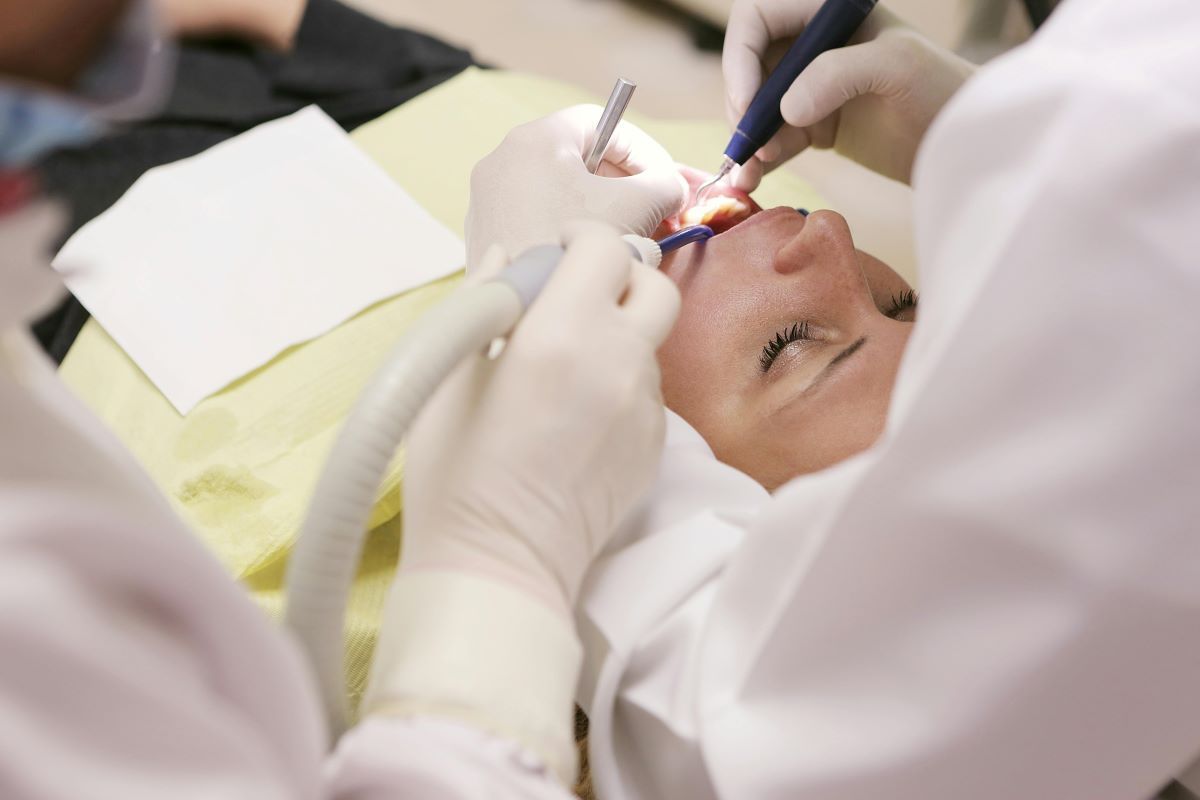
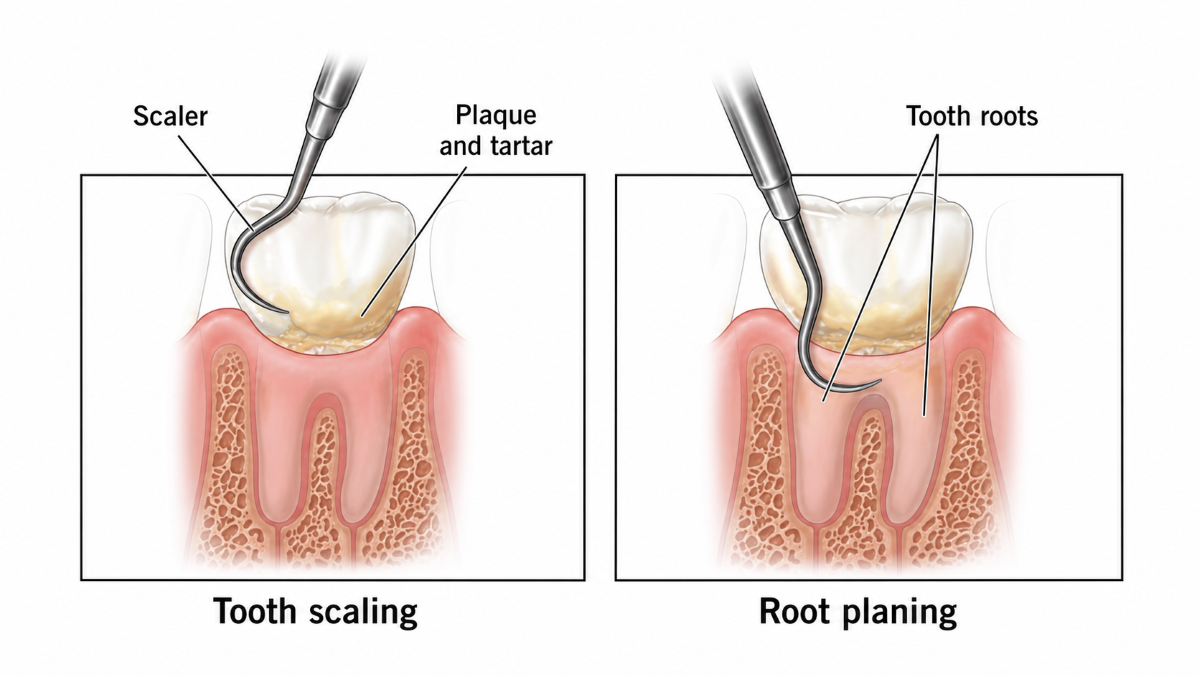
Scaling and root planing is a deep cleaning procedure that removes plaque and tartar from below the gumline and smooths the tooth roots to support gum reattachment. It treats gum infection and inflammation, and is recommended when routine cleaning is no longer sufficient. Treatment need is confirmed by clinical assessment.
What Deep Cleaning Involves
- Removal of plaque and tartar below the gumline, not just above it.
- Smoothing of the tooth roots so the gum tissue can reattach.
- Full mouth probing to assess pocket depths, (furcation) involvement, recession and bleeding on probing.
- Digital charting to track gum pocket depth over time.
- Typical cost $200 to $232 per session, discussed per quadrant or per area.
- May be completed over multiple visits, depending on severity.
Final pricing varies based on your individual clinical needs.
When Is Deep Cleaning Recommended?
When routine cleaning is no longer enough to control what is happening below the gumline. Root planing is recommended where there are signs of gum disease, and the need is always confirmed through clinical assessment first.
Dental scaling root planing usually follows findings from a dental exam or a dental hygiene visit, where probing or charting has picked up something that a standard clean cannot reach. Scaling and root planing is therefore diagnosed rather than requested.
- Signs of gum disease identified on examination
- Buildup present below the gumline
- Pocket depths, recession or bleeding on probing recorded during assessment
- Routine cleaning no longer sufficient to manage inflammation
How Is It Different From a Regular Cleaning?
The difference is depth and purpose. A routine clean works above the gumline for prevention; this works below it to treat active infection.
| Routine teeth cleaning | Deep cleaning below the gumline | |
|---|---|---|
| Where it works | Above the gumline | Below the gumline, on the root surface |
| Purpose | Preventive maintenance | Managing gum infection and inflammation |
| Root surfaces | Not treated | Smoothed to support gum reattachment |
| Visits | Usually one | May be completed over multiple visits |
| Numbing | Not usually needed | Local numbing options discussed when appropriate |
| Follows | A regular recall schedule | Findings from an exam or hygiene visit |
Routine Scaling Versus Deep Scaling
Dental scaling in the routine sense and deep teeth scaling below the gumline are genuinely different procedures, which is why they are priced and scheduled differently. Scaling teeth above the gumline will not resolve infection sitting beneath it.
What Techniques and Instruments Are Used?
Both manual and ultrasonic, selected according to how severe the gum disease is.
- Manual scaling instruments for deep deposits, including root scaling on the exposed root surface
- Ultrasonic scaling to remove plaque and bacteria
- Local numbing options discussed when appropriate
- Digital charting to track pocket depth between visits
- Technique selected based on the severity of gum disease
Before any of that, full mouth probing assesses your overall gum health: which teeth have pockets, whether there is (furcation) involvement between the roots of molars, how much recession is present, and where bleeding on probing occurs. That map is what determines the plan.
According to the Canadian Dental Association, removing unhealthy buildup and monitoring gum health are central to preventing gum disease from progressing.
How Much Does Scaling and Root Planing Cost?
Typical cost is $200 to $232 per session. Pricing is discussed per quadrant or per area rather than as one figure for the whole mouth.
- Cost depends on gum disease severity and the time required
- Insurance coverage may apply depending on your plan
- A clear explanation is provided before treatment begins
- Final pricing varies based on your individual clinical needs
Why It Is Quoted Per Area
Because scaling root planing is quoted per area, a patient needing one quadrant treated and a patient needing all four are not comparable, which is why the assessment comes before the quote.
What Should You Expect During and After?
Treatment is performed by trained dental hygiene professionals, with the dentist evaluating gum health and treatment progress.
- Mild sensitivity may occur temporarily after treatment
- Post-treatment care instructions are provided
- Follow-up visits may be recommended to monitor healing
- The dentist reviews gum health and progress alongside the hygiene team
This Is a Management Plan, Not One Visit
Periodontal deep cleaning is a management plan rather than a single appointment. Where gum problems are active, shorter recall intervals of 3 to 4 months are often recommended, sometimes alternating between in-office visits and periodontist intervals. Follow-up dental deep cleaning appointments are scheduled against that plan rather than a fixed calendar.
Frequently Asked Questions
What is root planing and scaling?
How is deep cleaning different from a normal cleaning?
Does it hurt?
How many appointments will I need?
Who performs the treatment?
Will my insurance cover it?
What happens after treatment?
Book a Gum Assessment in Waterloo
Bleeding gums are not something to wait out, and the probing assessment is what tells you whether a routine clean is still enough. If you have been told you need deep cleaning near you in Waterloo, start with the full mouth probing.
- Full mouth probing and digital charting, so pocket depths are tracked rather than estimated.
- Manual and ultrasonic instruments selected to the severity of the disease.
Book an assessment to find out whether scaling and root planing is needed.
Westmount Dental 50 Westmount Rd N #225, Waterloo, ON N2L 2R5, Canada