

Fluoride treatment is a preventive application of fluoride to the teeth that strengthens enamel and supports remineralisation, reducing the risk of cavities. It is applied professionally as a gel, foam or varnish during a routine dental visit, and the application itself is quick and painless.
Why This Matters More in Waterloo
- Waterloo Region no longer fluoridates its water supply, and cavity risk across the region is rising as a result.
- Applied as a gel, foam, or varnish, quick and painless, usually during a routine visit.
- Typical cost $38. Final pricing varies based on your individual clinical needs.
- Often included with preventive care, or billed separately.
- Recommended every 6 months to once a year, adjusted to your cavity risk.
- For patients under 18, verbal parental consent is taken before application.
Application takes minutes, needs no drilling or numbing, and is normally done at a recall visit rather than booked on its own. The interval is set from your own risk assessment, which matters more here than it used to since the region stopped fluoridating the water.
Who Should Get Fluoride Treatments?
Anyone whose cavity risk is elevated, which in this region covers more people than it used to. Recommendations follow an individual risk assessment rather than age alone.
- Children and teens at higher cavity risk
- Adults prone to tooth decay
- Patients with enamel weakness or sensitivity
- Patients with orthodontic appliances, including Invisalign attachments and braces
Fluoride treatment for kids is the most familiar version, but fluoride treatment for adults matters just as much where decay is recurring. Patients wearing orthodontic appliances are a particular case, because appliances create surfaces that are difficult to keep clean.
Why Is Cavity Risk Rising in Waterloo Region?
Because the water no longer contains fluoride. Waterloo Region does not have water fluoridation any more, and the clinic's own observation is that cavity risk, clinically (caries) risk, is rising across the region as a consequence.
That changes the calculation on professional application. Where a community water supply is fluoridated, residents receive a low continuous dose simply by drinking tap water. Without it, the protection has to come from somewhere else.
Enamel is in constant flux. Acid from oral bacteria pulls minerals out of the tooth surface, and saliva puts them back in.
Fluoride shifts that balance, so the enamel which reforms is more resistant to the next acid attack than it was before. That is what remineralisation actually means in practice.
Community water fluoridation worked by keeping a low level present all day, every day. A topical application works differently: a much higher concentration, applied briefly, once or twice a year.
Neither replaces brushing. But in a region without fluoridated water, professional application now does more of the work than it used to, which is why it is discussed with patients who would once have been considered low risk.
What That Means for Your Recall Visits
For most patients here, it means topical application at recall visits plus good home care. The Region of Waterloo publishes the history of fluoridation in the local water supply, and the Canadian Dental Association sets out why fluoride remains central to cavity prevention.
How Is It Applied?
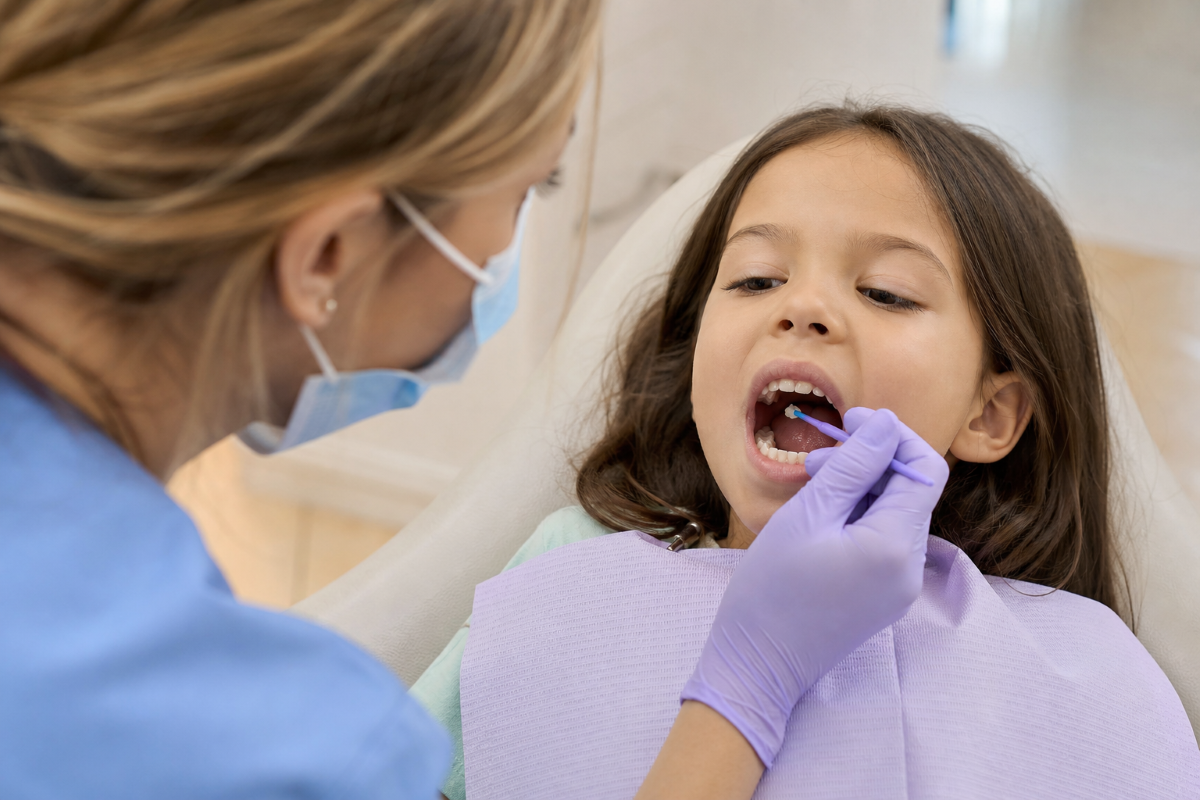
As a gel, foam, or varnish, and it takes very little time. Fluoride varnish treatment is the form most often used on younger patients because it sets on contact.
- The application form is selected, gel, foam or varnish.
- It is applied to the teeth, usually during a routine visit.
- Post-treatment instructions are provided.
- You carry on with your day, with minimal disruption.
No Drilling, No Numbing
There is no drilling, no numbing and no recovery. That is the whole appeal of a preventive measure: it costs one short appointment slot and prevents work that would cost considerably more.
How Often Should It Be Applied?
Typically every 6 months to once a year, though the interval is adjusted to your cavity risk rather than applied as a rule.
- Frequency is adjusted based on individual cavity risk
- May form part of routine preventive care
- Reviewed during your dental exams
- Tailored to age and oral health status
Risk is not static either. A patient who develops recurring decay, begins orthodontic treatment, or experiences dry mouth from medication can move from low risk to higher risk without anything else changing.
That is why the interval is reviewed at each exam rather than set once. In practice, application is done during regular cleanings based on individual patient needs, so it fits into an appointment you were already attending.
How Much Is Fluoride Treatment?
Typical cost is $38. Final pricing varies based on your individual clinical needs.
- Often included with preventive care, or billed separately
- Insurance coverage is reviewed when applicable
- You are informed before application, always
- For patients under 18, verbal parental consent is taken first
What You Are Comparing It Against
Value is explained in terms of cavity prevention. At $38 against the cost of a filling, the arithmetic is not complicated, which is the honest argument for a fluoride dental treatment at recall.
Frequently Asked Questions
Are dental fluoride treatments necessary?
Are fluoride treatments worth it?
How often do adults need fluoride?
Does it hurt?
What is the fluoride treatment aftercare?
Do you need parental consent for children?
Can I get it at my cleaning appointment?
Book Preventive Care in Waterloo
The local water changed, and prevention has to account for that. If you are looking for a fluoride treatment near you in Waterloo, it can be added to your next hygiene visit.
- Gel, foam or varnish application, quick and painless, at $38.
- Interval set against your own cavity risk rather than a standard schedule.
Ask about fluoride treatments at your next appointment.
Westmount Dental 50 Westmount Rd N #225, Waterloo, ON N2L 2R5, Canada