
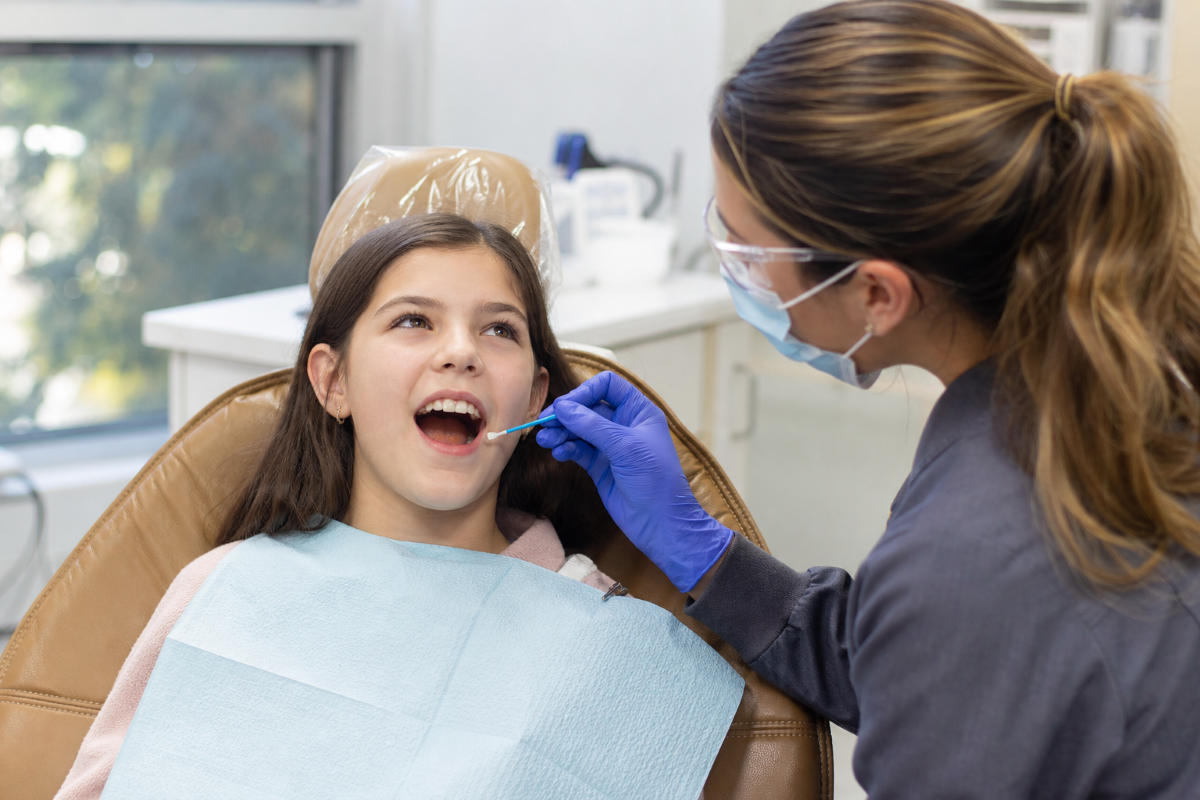
A dental sealant is a preventive coating applied to the chewing surfaces of the back teeth, filling the grooves and pits where bacteria and plaque collect. It acts as a protective barrier over the enamel and reduces the risk of decay in areas a toothbrush cannot reach effectively.
What Sealants Do, and What They Do Not
- Painted onto the chewing surfaces to seal the grooves and pits, clinically the (fissures).
- No drilling and no anaesthetic required. The procedure is quick and painless.
- Typical cost $38 per tooth. Final pricing varies based on your individual clinical needs.
- Often covered for children under preventive insurance benefits.
- Ideally reviewed at 1 year, since sealants wear and require replenishing.
- Where a groove already shows a lesion, a preventive resin restoration (PRR) is usually recommended instead.
Sealants are placed after a risk assessment rather than routinely, and only on teeth free of active decay. Application takes minutes with no drilling, and the seal is reviewed at your regular visits so it can be replenished as it wears.
Who Should Get Dental Sealants?
Not only children, although newly erupted molars are the classic case. Recommendations follow an individual risk assessment.
- Children and teens with newly erupted molars
- Adults with deep grooves or high cavity risk
- Patients with a history of tooth decay
- Patients simply seeking added preventive protection
Dental sealants for kids are the most common application, but dental sealants for adults are placed wherever deep grooves and high risk coincide. In a region without fluoridated water, that combination is worth taking seriously, which is why sealants and fluoride treatment are often discussed together.
Which Teeth Are Suitable?
Not every tooth qualifies, and the assessment matters more than the material. Sealants for molars are the standard use because molars carry the deepest grooves.
- Teeth must be free of active decay
- Best suited to molars with deep grooves and pits, which is why molar sealants are the standard case
- Evaluated during dental exams and risk assessments
- Not placed on teeth with existing fillings
Where a Sealant Is Not the Answer
Clinical judgement rests on enamel condition and oral hygiene. Sealing a tooth that already has decay would trap the problem rather than prevent it.
Sealant or Preventive Resin Restoration?
Where a groove has already started to break down, a plain sealant is not the right answer. A preventive resin restoration, a hybrid between a fissure sealant and composite resin, is used instead, and it is also non-invasive. Fissure sealants on sound grooves and a PRR on a groove that has already broken down are different treatments.
| Dental sealant | Preventive resin restoration (PRR) | |
|---|---|---|
| Used when | Grooves are sound, no decay present | A lesion is present in the deep grooves and fissures |
| Material | Sealant coating only | Hybrid of fissure sealant and composite resin |
| Invasive | No | Also non-invasive |
| Purpose | Prevent decay starting | Treat early breakdown and prevent it progressing |
Which one you need is decided at examination, not requested. Both sit at the preventive end of the scale, well short of a conventional tooth filling.
How Is a Sealant Applied?
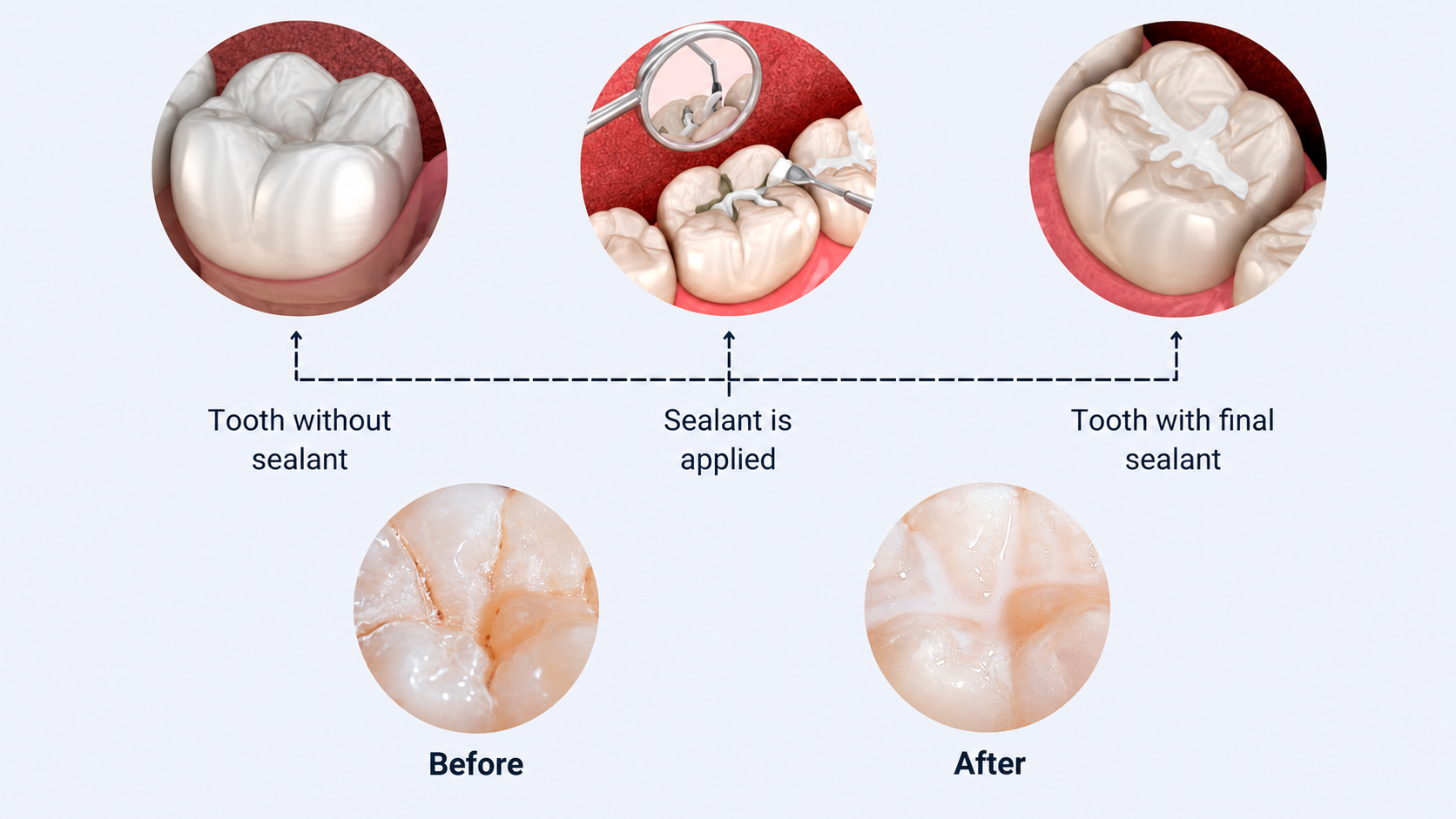
In four steps, with no drilling and no needle. The dental sealant procedure is one of the few dental appointments that requires nothing of you at all, and the dental sealant application itself takes only minutes.
- The teeth are cleaned and prepared.
- The sealant material is painted onto the tooth surface.
- The coating sets, forming a barrier over the enamel.
- You leave. There is no numbing to wear off and no aftercare period.
When It Is Applied
Application is completed after a teeth cleaning appointment, or in a separate appointment, depending on what you prefer.
How Long Do Sealants Last?
Ideally they are reviewed at 1 year. Sealants undergo wear and require replenishing, so treating them as permanent is the common mistake.
- Checked during regular dental exams
- Reapplied if wear or damage is detected
- Longevity depends on oral habits and bite forces
- Part of ongoing preventive care planning rather than a one-off
Two habits shorten sealant life more than anything else: chewing gum and sticky food. Avoiding both is the most useful thing you can do to prolong the lifespan of a tooth sealant. Tooth sealants are consumable rather than permanent, and the tooth sealant procedure is repeated as needed.
According to the Canadian Dental Association, preventive measures work best when they are monitored at regular check-ups rather than placed and forgotten.
How Much Do Sealants Cost?
The dental sealants cost here is straightforward: $38 per tooth. Final pricing varies based on your individual clinical needs.
- Often covered for children under preventive insurance benefits
- Coverage is reviewed based on age and plan details
- You are informed before placement
- Value is explained in terms of long-term cavity prevention
What It Costs Against a Filling
At that figure, a dental tooth sealant on a molar costs a small fraction of restoring the same tooth later, which is the entire argument for placing one.
Frequently Asked Questions
What are dental sealants?
Can dental sealants be removed?
Does the procedure hurt?
Are sealants only for children?
Can a sealant be placed on a tooth with a filling?
What is a preventive resin restoration?
Can I have them done at my cleaning appointment?
Book Preventive Care in Waterloo
Sealing a molar costs $38 and takes minutes. Restoring the same molar later costs considerably more and takes a great deal longer. If you are looking for dental sealants near you in Waterloo, they can be added around your next hygiene visit.
- No drilling, no anaesthetic, and nothing required of you afterwards.
- Assessed tooth by tooth, with a preventive resin restoration used where a groove has already broken down.
Ask about dental sealants at your next examination.
Westmount Dental 50 Westmount Rd N #225, Waterloo, ON N2L 2R5, Canada