
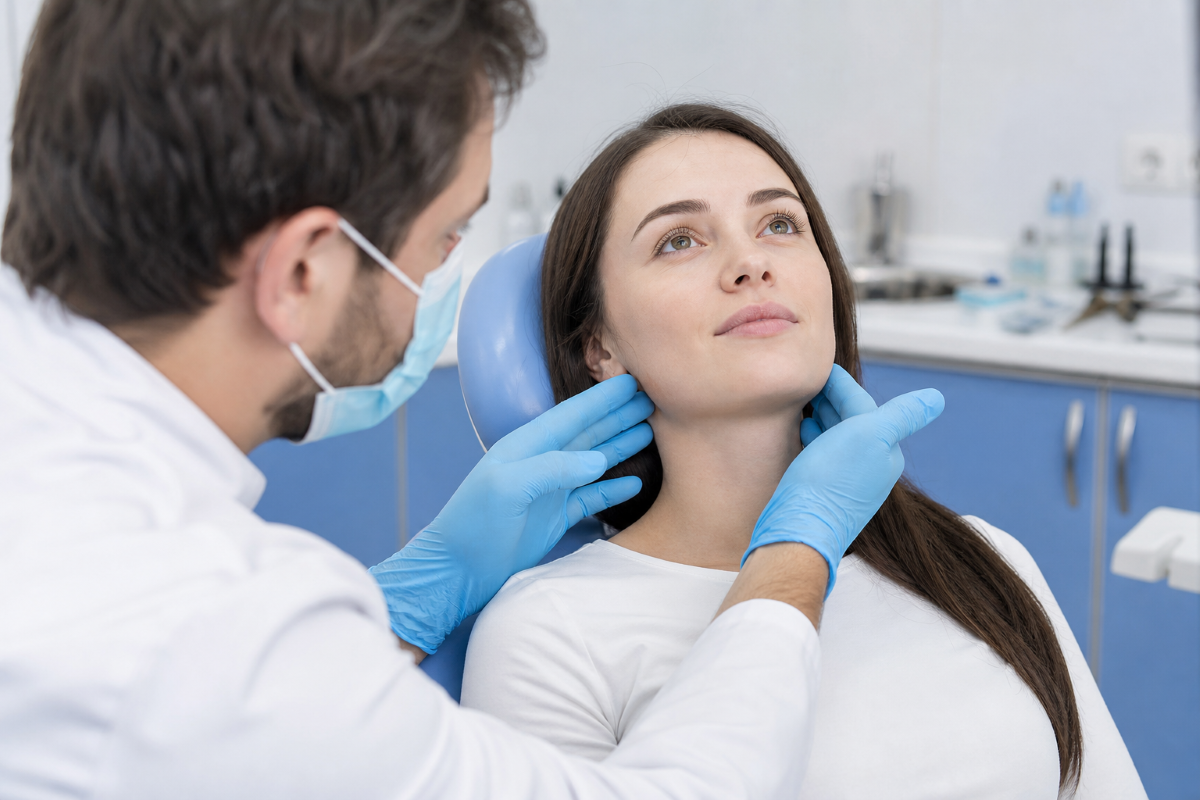
An oral cancer screening is a preventive examination that checks the mouth, tongue and throat for abnormal tissue before symptoms appear. It combines visual inspection with gentle palpation of the oral tissues and neck, alongside a review of history and symptoms, and is commonly performed during a routine dental exam.
What the Screening Involves
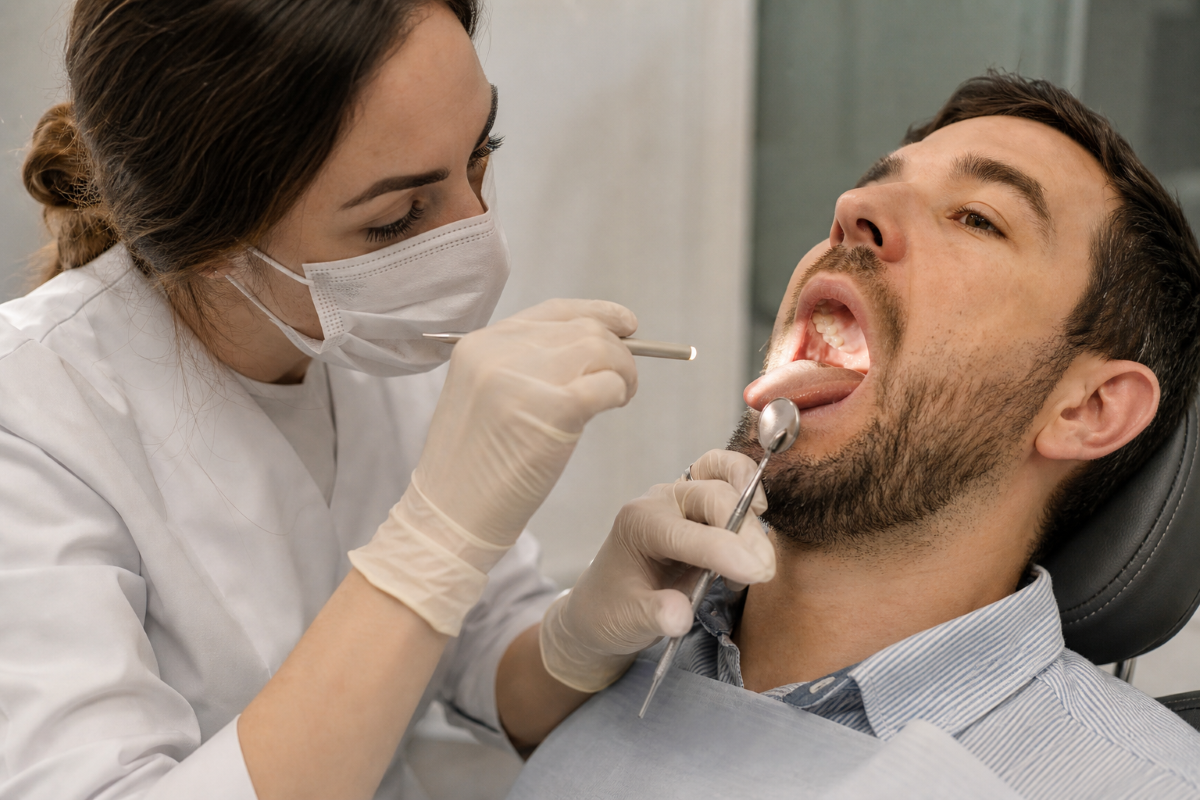
- A visual examination of the mouth, tongue and throat, plus gentle palpation of the oral tissues and neck.
- A review of your patient history and any symptoms you have noticed.
- Screening aids are used where appropriate.
- Findings are explained clearly to you during the visit.
- Screening is often included as part of a routine dental exam rather than booked separately.
- Where a lesion is identified, regular follow-up appointments are arranged to monitor whether it progresses or regresses. A dental hygiene visit is another point at which the oral tissues are reviewed.
Most patients are screened without booking anything separately, because the examination sits inside a routine appointment. It takes minutes, needs no preparation, and anything found is explained to you before you leave.
How Do I Get Screened for Oral Cancer?
Book a routine dental exam. The screening is carried out inside that appointment.
The examination itself is quick, painless and non-invasive:
- Your history and any symptoms you have noticed are reviewed.
- The mouth, tongue and throat are examined visually.
- Oral tissues and the neck are gently palpated by hand.
- Screening aids are used where they are clinically appropriate.
- Findings are explained to you before you leave.
Nothing about the examination is uncomfortable, and no preparation is needed beforehand.
What Are the Signs of Oral Cancer to Watch For?
Five changes are worth reporting between appointments. None of them means cancer on its own, and most turn out to be something else, but all five are worth having looked at rather than waiting.
- Persistent sores or ulcers that do not heal
- Lumps, thickened tissue, or swelling anywhere in the mouth or neck
- Red or white patches in the mouth
- Difficulty swallowing or chewing
- Ongoing numbness or discomfort
The Common Thread Is Persistence
A sore that clears up in a week is ordinary. One that is still there after three weeks is worth a look, and the same logic applies to a patch, a lump or an area of numbness that does not settle.
Who Should Be Screened, and How Often?
Adults of all ages, as part of routine care. Screening is typically recommended every 6 months, with the interval adjusted according to your individual risk assessment.
Patients Screened With Particular Attention
- Adults attending routine appointments, regardless of age
- Patients with higher risk factors, including tobacco and alcohol use, where a dentist oral cancer screening carries extra weight
- Patients with a history of oral health concerns
Where a lesion has already been identified, regular follow-up appointments are booked specifically to track whether it is progressing or regressing over time.
Are Oral Cancer Screenings Worth It?
The value is in timing. Screening is designed to identify potential concerns before symptoms appear, which is precisely the window in which outcomes are best.
The examination supports early diagnosis, and early diagnosis is consistently associated with better outcomes. Because the examination is quick and painless and usually sits inside an appointment you were attending anyway, the cost of doing it is very low against what it can catch.
The Canadian Dental Association publishes patient guidance on oral cancer and the importance of professional examination of the oral tissues.
What Does It Cost, and What Happens Next?
Screening is often included as part of routine exams, which is why oral cancer screening cost rarely appears as a separate line. Where it is billed separately, the cost is explained to you clearly beforehand. Final pricing varies based on your individual clinical needs.
If Something Abnormal Is Found
Where the examination raises a concern, the next steps are set out for you rather than left vague:
- Further evaluation is recommended
- A referral is arranged where that is appropriate
- Regular follow-up appointments monitor the progress or regression of the lesion
- You are supported through each of the next steps rather than left to work them out
Findings are always explained clearly, and nothing is decided without you understanding why.
Frequently Asked Questions
Do dentists screen for oral cancer?
How often should the screening be done?
Does the screening hurt?
Is the screening included in a regular checkup?
What happens if the dentist finds something?
Can I check my own mouth between visits?
Book Your Screening in Waterloo
The examination takes minutes, costs little or nothing on top of a routine visit, and looks for exactly the changes that are easiest to treat when found early. If you are looking for oral cancer screening near you in Waterloo, it can be built into your next exam.
- Visual examination plus gentle palpation of the oral tissues and neck, with findings explained the same visit.
- Follow-up appointments arranged to monitor any lesion over time.
Book your screening as part of your next appointment.
Westmount Dental 50 Westmount Rd N #225, Waterloo, ON N2L 2R5, Canada