

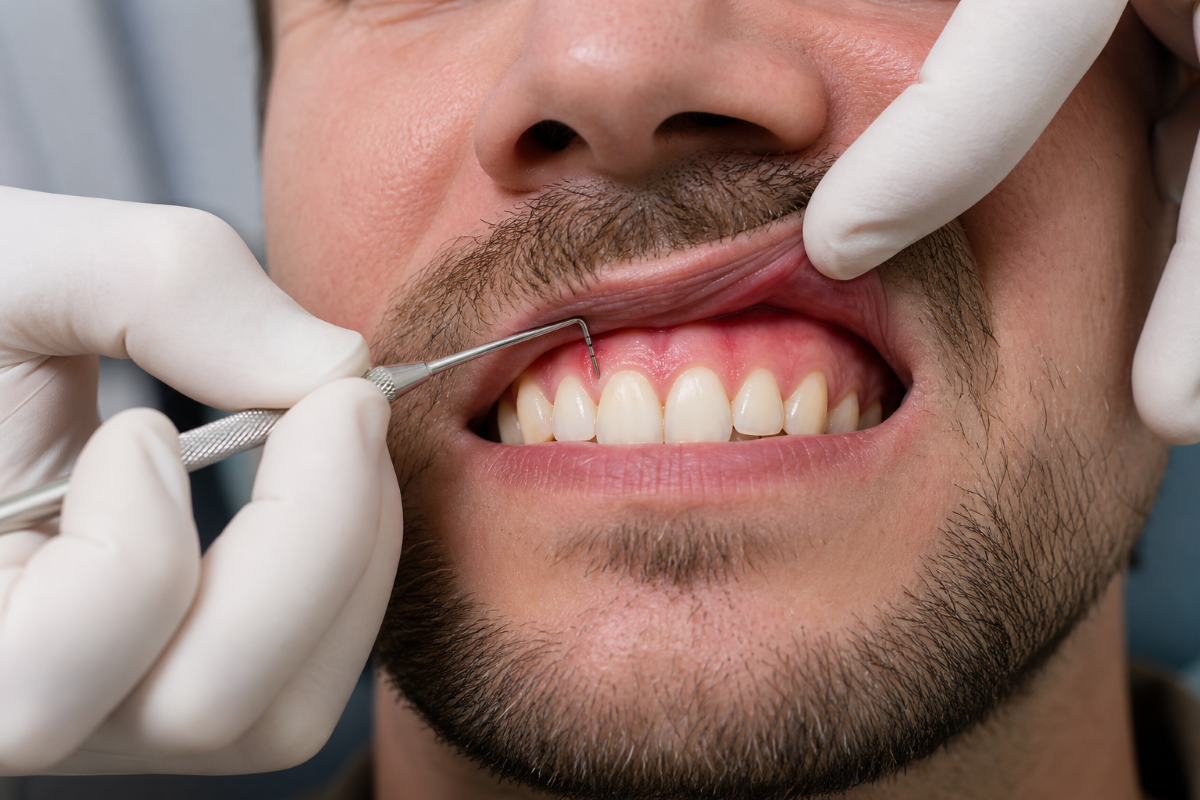
A gummy smile is one that shows an excessive amount of gum tissue above the teeth when smiling. It is assessed against tooth, gum, lip and facial proportions, and the cause may be excess gum tissue, short-appearing teeth, upper lip movement, or jaw position. Treatment depends on which cause applies.
Why the Cause Matters More Than the Symptom
- Evaluated through clinical examination and smile analysis, not by appearance alone.
- Assessed against tooth, gum, lip and facial proportions together.
- Four possible causes, and the right treatment depends entirely on which one applies.
- Options include gum contouring, orthodontics, or restorative treatment, alone or combined.
- Suitability is determined by identifying the underlying cause first.
- Recommendations are personalised, and discussed in the context of overall smile balance.
The evaluation comes before any treatment recommendation, because the same appearance has four different causes and each needs a different answer. Insurance and cost are reviewed against your plan once the approach is settled.
What Causes It?
Four things, and they are not interchangeable. This is why the condition cannot be assessed from a photograph.
- Excess gum tissue covering part of the teeth
- Teeth that appear short because of eruption or wear patterns
- Upper lip movement exposing more gum when you smile
- Jaw position or skeletal structure
Most cases are a combination of dental, muscular and anatomical factors rather than one clean cause. It also varies with individual anatomy and with smile dynamics, meaning how your lip actually moves when you smile rather than how it sits at rest.
How Do You Get Rid of a Gummy Smile?
By treating the cause that applies to you. Four treatment routes exist, and the choice follows the diagnosis rather than patient preference.
| Underlying cause | Treatment approach |
|---|---|
| Excess gum tissue | laser gum contouring or reshaping, the usual route for gum contouring for gummy smile cases, described as crown lengthening where it exposes more tooth structure |
| Teeth appear short from wear | Restorative treatment such as dental veneers to improve tooth proportions |
| Tooth position | Orthodontic treatment such as Invisalign to reposition teeth |
| Combination of factors | A combined approach based on clinical findings |
Combination Causes, Combination Treatment
Combination approaches are common, because combination causes are common. Gummy smile treatment is planned from the clinical findings, and a comprehensive evaluation is performed before anything is recommended.
Who Is a Candidate for Treatment?
Patients genuinely bothered by how much gum shows when they smile, and those wanting better smile balance and proportions. Both are legitimate reasons.
- Patients concerned about excessive gum display when smiling
- Individuals seeking improved smile balance and proportions
- Candidates assessed through clinical and facial analysis
- Suitability determined by identifying the underlying cause
Nobody is offered treatment before the cause is established. That order matters: contouring gum tissue will not help a smile whose real cause is lip movement, and repositioning teeth will not help one caused by excess tissue.
Is It a Health Problem?
Generally it is a question of proportion rather than disease. It is discussed with patients in the context of overall smile balance, and it varies with individual anatomy.
Why the Evaluation Is Clinical
The evaluation is clinical rather than purely cosmetic. Examination and smile analysis look at the tissue, the teeth, the lip and the facial proportions together, which is how the underlying cause gets identified rather than guessed at.
According to the Canadian Dental Association, a dental examination assesses the gums and soft tissues alongside the teeth, which is exactly where this evaluation begins.
How Is Treatment Planned, and What About Cost?
A comprehensive evaluation comes first, always. The approach is then selected based on clinical diagnosis and your goals rather than from a standard protocol.
- Comprehensive evaluation performed before treatment is recommended
- Approach selected on clinical diagnosis and your goals
- Insurance coverage may vary based on medical necessity and plan details
- Coverage and benefits are reviewed with you before treatment where applicable
Final pricing varies based on your individual clinical needs. Because the treatments involved differ so much, from soft tissue contouring to orthodontics, cost is quoted against your plan rather than against the condition.
What the Value Is Measured Against
Value is explained in terms of improved smile balance and long-term outcomes rather than the immediate change alone.
Frequently Asked Questions
What does a gummy smile indicate?
Is it possible to get rid of a gummy smile?
How to fix a gummy smile, or make a smile less gummy?
Are gummy smiles unhealthy?
Is fixing it worth it?
Will insurance cover the treatment?
Book a Smile Analysis in Waterloo
The single most useful thing you can do is find out which of the four causes applies to you, because that determines everything else. If you are looking for gummy smile treatment near you in Waterloo, the smile analysis is where it starts.
- Clinical examination and smile analysis covering tooth, gum, lip and facial proportions.
- Treatment matched to the identified cause, not applied as a default.
Book a smile analysis and find out what is actually causing it.
Westmount Dental 50 Westmount Rd N #225, Waterloo, ON N2L 2R5, Canada